Showing posts sorted by relevance for query schleswig holstein. Sort by date Show all posts

Thursday, May 28, 2020

A Natural child: Valerie Marie zu Schleswig-Holstein

all images from Marlene A Eilers Koenig's collection


My book, Queen Victoria's Descendants, was the first to include complete genealogical information about Valerie Marie zu Schleswig-Holstein, the natural daughter of Duke Albert of Schleswig-Holstein, a grandson of  Queen Victoria.  I was fortunate to have the assistance of the late HH Prince Friedrich Ferdinand of Schleswig-Holstein and the archivist of the Duke of Arenberg, who provided me with documents to fill in the missing pieces. Unfortunately, there is a lot of misinformation (and disinformation), including from an opportunist who created a fake noblewoman claiming she was the mother of Valerie Marie.  For the record, her mother's name is not known. According to Duke Albert's letter to Valerie, her mother was described as a "lady of very high rank."

Valerie Marie was mentioned in several genealogical references.  Her information was incomplete until I obtained the missing details, including her first marriage, when she was able to change her surname, and even about her death.

In a letter to me in August 1980, Prince Friedrich Ferdinand stated that the Duke of Arenberg had made a similar request more than 20 years prior.   Here is the text from my book:

"Like his cousin, the Duke of Albany, Prince Albert transferred his residence to Germany when it became clear that the marriage of his cousin, Duke Ernst Gunther of Schleswig-Holstein-Sonderburg-Augustenburg, would be childless.  He succeeded to the Augustenburg estates upon his cousin's death in 1921.


Prince Albert never revealed the name of his daughter's mother to anyone, not even his daughter, although he did tell his two sisters that the woman was of high birth.

Born in a part of Hungary now in Czechoslovakia in 1900, Valerie Marie was raised by a Jewish family named Schwalb, whose name she bore until her first marriage to lawyer Johann Wagner.  In 1939, she acquired the surname zu Schleswig-Holstein by registration, and her birth registration was also updated to reflect that Prince Albert was her natural father.

Valerie Marie knew nothing of her parentage until she received a letter from Albert in 1931, only a few days before his death.

The change of her name was necessary because Valerie Marie was engaged to marry Duke Engelbert-Charles of Arenberg. As her maiden name was of Jewish origin, Valerie Marie was thought to be Jewish, and under Nazi law, mixed marriages were not permitted.  Although her foster parents were Jewish, Valerie Marie was a Roman Catholic.

In July 1938, Valerie Marie's two aunts, Princess Helena Victoria and Princess Marie Louise, co-signed a letter acknowledging their niece and attesting that Valerie Marie was not Jewish.

"We hereby acknowledge and declare that Valerie Wagner is the illegitimate daughter of our brother His Highness Duke Albert of Schleswig-Holstein, who died on the 27th of April 1931.  We are entirely ignorant of the names and identity of Valerie Wagner's mother, but we understand that she was a lady of very high rank.  Our brother, in order to shield this lady's honour, never divulged her name to anyone.  Valerie Wagner's foster parents, in whose name she was registered, were of Jewish descent, but we desire to emphasize the fact that Valerie Wagner herself is not of Jewish birth.  Our brother, the Duke of Schleswig-Holstein, in a personal letter to Valerie Wagner, deplored the fact that she had been entrusted to the care of a family of a different race and faith to her own."

Valerie Marie's first marriage ended in divorce in 1938 and was annulled by the Catholic Church two years later.  She married the Duke of Arenberg in a civil ceremony in Berlin in 1939.  A Roman Catholic ceremony was performed in October 1940 following the annulment.

In April 1945, the American 9th Army requisitioned the Arenbergs' 300-room castle on the Rhine River.  The Duchess was indignant when the officers asked her to give up most of the rooms in the 200-year-old castle.  `I wouldn't put servants in the quarters the Americans asked me to live in.  Imagine me getting along in fourteen rooms,' she told an Associated Press reporter.

The Duchess of Arenberg died in 1953.  Her aunt, Princess Marie Louise, attended Valerie Marie's funeral at Enghien, Belgium.  Born illegitimate, her mother's name unknown, Valerie Marie died a duchess with the style of Serene Highness."

Princesses Helena Victoria and Marie Louise's notarized statement was written on  July 26, 1938.  Valerie Marie divorced her first husband, Ernst Johan Wagner, in 1938.  They had married in a civil and a Roman Catholic ceremony, and the divorce applied to the civil marriage.  The Roman Catholic wedding was annulled.  Valerie Marie was engaged to Duke Engelberg-Charles of Arenberg. German authorities were not going to allow the marriage to take place, as Valerie Marie had been raised by a Jewish family named Schwalb.  Valerie Marie was Roman Catholic, and she had to prove to the German authorities that she was not Jewish.

  When she married Ernst Johann Wagner, MD, in 1925, she used the name Valerie Marie Schwalb. When the marriage was annulled in October 1940, she used the name Schleswig-Holstein, although she was using Schwalb when she was granted a civil divorce in 1938.

Valerie Marie was born on April 3, 1900, in Liptovsky Svaty Mikulas, Hungary.  Her birth was registered the following day: Valerie Maria Schwalb, girl Roman Catholic.

(Liptovsky was a part of Hungary until 1920, then Czechoslovakia until 1938, when it became Slovakia, from 1945 until January 1, 1993, again in Czechoslovakia, and now Liptovský Mikuláš in Slovakia).


Duke Albert's letter to Valerie Marie was written on April 15, 1931.  He died on April 27.  Valerie Marie's birth registration was changed on May 5, 1939.  This was done at the District office in Liptovsky Svata Mikulas.  The name Valerie Maria Schwalb was erased and replaced with "Natural father of the child is Albert Herzog zu Schleswig-Holstein.  As the name of the girl, the family name is specified as zu Schleswig-Holstein."


The official letter from Princesses Helena Victoria and Marie Louise

During the Second World War, Valerie Marie and her husband, Engelbert-Charles, had lived in Germany, although  Prince Engelbert-Charles was a Belgian national.  In March  1945, the U.S. 2nd Armored Division captured the family's 200-year-old castle, Schloss Nordkirchen in Westphalia. The Duke claimed that he was not a Nazi, and had not fought in the war, but the American military noticed an autographed photo of Joachim von Ribbentrop, the German foreign minister. 

He also told the American authorities that he had met Hermann Goering once.  This happened in 1939 when he married the daughter of the Duke of Schleswig-Holstein.  As she was part English, the British Ambassador Neville Henderson had introduced them to Goering, who "had arranged the necessary papers for them."

Living with Valerie and Engelbert Charles was Karl Rudolf, the Prince's cousin, the Duke of Croy, whose home had been destroyed by a bomb ten days earlier.  (The Duke was married four times.  His first wife was American, Nancy Leishman.  They divorced in 1922.)

Valerie Marie never met her father, but she did have a relationship with her two aunts, which led to meeting other cousins, including Queen Victoria Eugenia of Spain, who lived in exile in Switzerland.

"My mother loved "the Schleswig-Holstein bastard" who smothered her with lovely presents," Infanta Maria Cristina of Spain wrote to me in July 1988.  "But Aunt Louie [Princess Marie Louise of Schleswig-Holstein] wasn't amused by this intimacy between the cousins.  She was always known as the bastard.  Poor Valerie,  very smart, pretty & fickle.  She killed herself one night with every pill she found.  Depression I suppose and an impossible love.  It was a general shock.  Her father must have been a crashing pompous bore!"

https://royalmusingsblogspotcom.blogspot.com/2009/04/duke-albert-dies-at-62-grandson-of.html


If you liked this article:

Monday, March 1, 2021

Princess Helena's son now Duke of Schleswig-Holstein

Embed from Getty Images 

March 1, 1921


Prince Albert of Schleswig-Holstein, the only surviving son of Princess Helena, has succeeded Ernst Gunther, Duke of Schleswig-Holstein, who died on February 22 without issue.    The new Duke is Ernst Gunther's first cousin as their fathers were brothers.

Albert is the younger and only surviving son of Princess Helena, the third daughter of Queen Victoria, and the late Prince Christian of Schleswig-Holstein.   He was born at Cumberland Lodge in Windsor Great Park and educated at Charter House School.  Following the death of his cousin, Albert becomes the titular head of the house of Schleswig-Holstein.  He has inherited a large fortune including+ the "great estate of Primkenau, in Silesia," and other properties.  He will also receive an annuity of $80,000, which which is paid annually by the Prussian treasury as a "quid pro quo for the renunciation by the Dukes of Schleswig-Holstein," when the two duchies were incorporation into the kingdom of Prussia, reported the Marquis de Fontenoy in the Washington Post.

He had become the heir after his elder brother, Prince Christian Victor, renounced his rights to the Schleswig-Holstein dukedom in favor of his younger brother as he was "unwilling to give up his English nationality" and his military career.

Prince Christian Victor died of enteric fever in October 1900.

Albert severed his connection with the British army and moved to Germany.  He became a German citizen and joined the Prussian army.  He also graduated from several officers' training schools and was appointed to the German Army's general staff.

The recent war  was difficult for Albert, as he was "too closely connected with the land of his birth."  Empress Auguste Viktoria, who was Ernst Gunther's sister, had maintained a close relationship with Albert as the two had spent a lot of time at Cumberland Lodge when they were children.

After the war had broken out, Albert made it clear that he would not take up arms against the United Kingdom.  He offered to fight on the Russian front.  Both the Emperor and Empress respected his decision,   Wilhelm II arranged for Albert to be assigned to General von Lowenfeld's staff.  Von Lowenfeld served as the military Governor of Berlin.

Wilhelm II and Albert were also first cousins, both grandsons of Queen Victoria.  

In Berlin, Albert found himself with little to do.  He "devoted his time" to help British citizens in internment camps and British prisoners of war.

The late Duke was a "source of no end of trouble and exasperation" to his sister and brother-in-law.  He married in 1898 to Princess Dorothea of Saxe-Coburg and Gotha, a granddaughter of King Leopold II of the Belgians.   The new Duchess of Schleswig-Holstein was only 17 at the time of marriage and her husband was approaching his 35 birthday.

As the marriage produced no children, the focus for the succession centered on Ernst Gunther's British-born cousin, Prince Albert, who is not married.


If you liked this article, perhaps you can buy me a coffee... thanks


https://royalmusingsblogspotcom.blogspot.com/2014/09/what-will-happen-to-prince-albert-of.html


https://royalmusingsblogspotcom.blogspot.com/2014/09/ernst-gunther-banished.html


https://royalmusingsblogspotcom.blogspot.com/2011/02/ernst-gunter-duke-of-schleswig-holstein.html


https://royalmusingsblogspotcom.blogspot.com/2010/08/look-at-ernst-gunther-of-schleswig.html

Thursday, September 28, 2023

A QVD Death: HH Prince Christoph of Schleswig-Holstein (1949-2023)

@Schloss Louisenlund


The news of Prince Christoph's death was announced by the Louisenlund Foundation, which runs  Louisenlund, a private boarding school in Güby, Schleswig-Holstein. In 1949, on the advice of Karl Hahn, Duke Friedrich of Schleswig-Holstein-Sonderburg-Glücksburg established a boarding school at Schloss Louisenlund.


"The lives of Prince Christoph of Schleswig-Holstein and Louisenlund are closely linked: he was born there on August 22, 1949, the year the foundation was founded, as the eldest son of Duke Peter of Schleswig-Holstein and Duchess Marie Alix, where he also lived was a student until he graduated from high school in 1969.

After military service, he completed his studies in agricultural sciences in Munich and Kiel.

As a result of the early death of his father, Duke Peter, in 1980 he took over his responsibilities for the agricultural and forestry property as well as the chairmanship of the Louisenlund Foundation. Until then he had worked in what was then the Mannesmann Group.

For the following 24 years, he chaired the board of the Louisenlund Foundation. In 2004, his sister Princess Ingeborg of Schleswig-Holstein joined the foundation's board of directors and took over its chairmanship shortly afterwards. He then continued to be regularly active on the board of trustees, serving as an honorary member for the last two years.

On September 27th, Prince Christoph died as a result of a long-term illness, which he had borne with great strength and confidence.

Prince Christoph saw it as his family's responsibility to stand up for Louisenlund. With the same opinion, he chaired the Glücksburg Castle Foundation until his death. He was a co-founder of GLC Glücksburg Consulting GmbH and was until recently chairman of the supervisory board.

Prince Christoph of Schleswig-Holstein played an active role in Louisenlund's development for decades. He played a key role in ensuring that the school and boarding school enjoy a high reputation at home and abroad. He was convinced of the innovative and modern orientation of pedagogy and welcomed the spirit of optimism, especially in recent years.

For Prince Christoph, a future-oriented economic and energy policy was essential; The plus-MINT talent development center in Louisenlund received particular attention. He enjoyed following the students' many successes in scientific competitions. He dedicatedly supported Louisenlund's mission to give young people the opportunity to receive a solid education so that they can develop into outstanding professionals and leaders for the challenges of the future!

The Louisenlund Foundation will remember Prince Christoph with gratitude for his many years of responsibility and his lifelong commitment." 

  Embed from Getty Images


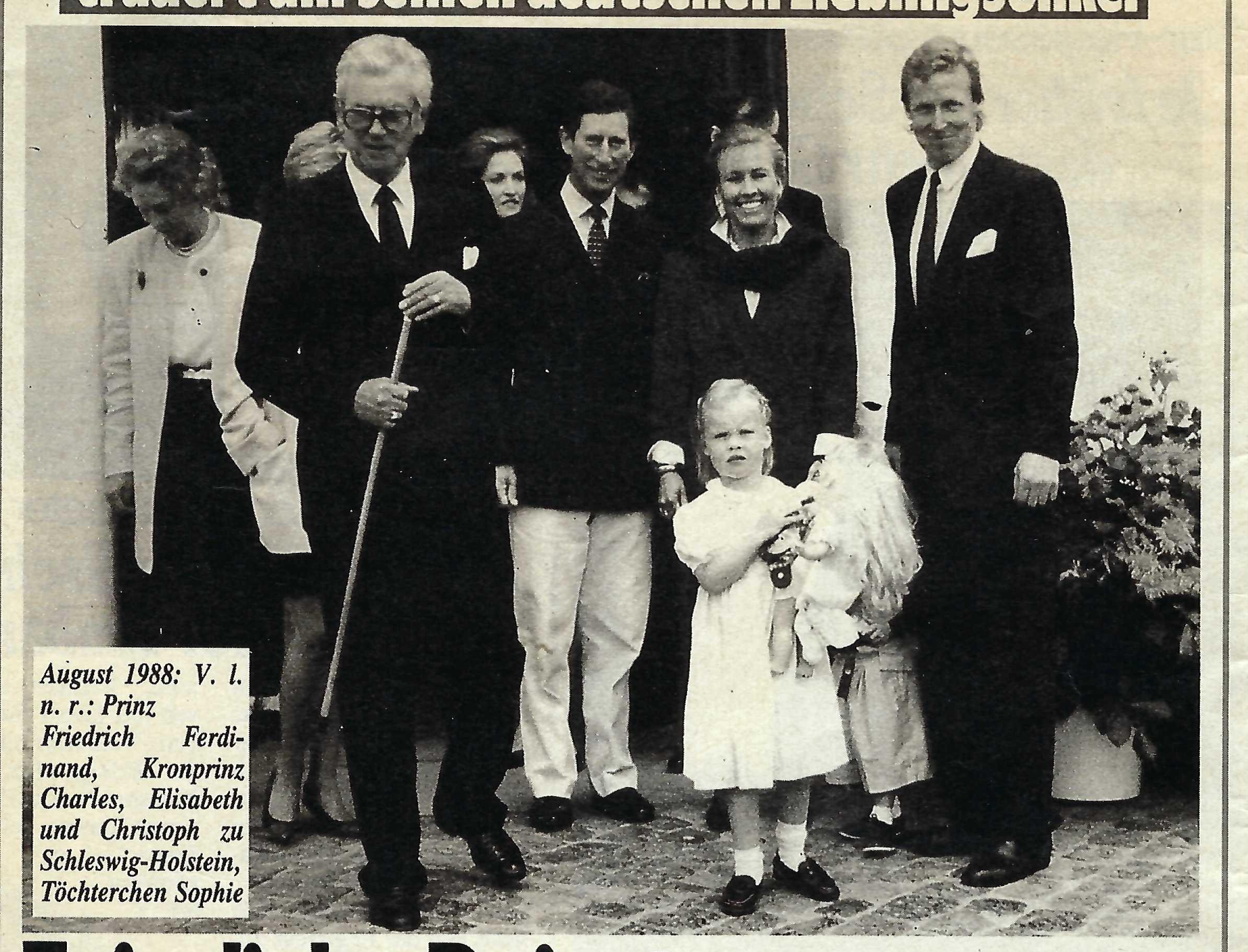
HH Prince Christoph was the head of the Ducal House of Schleswig-Holstein-Sonderburg-Glückburg. He was born at Schloss Louisenlund on August 22, 1949, the second of four children of Friedrich Ernst Peter, Duke of Schleswig-Holstein-Sonderburg-Glücksburg  (1922-1980) and Princess Marie Alix of Schaumburg-Lippe (1923-2021).  

  Embed from Getty Images 

 In 1981, in Glücksburg, he married Princess Elisabeth zur Lippe-Weissenfeld.

Marlene A Eilers Koenig collection


He is survived by his wife. Princess Elisabeth, and their four children, Princess Sophie, Prince Friedrich Ferdinand, Prince Constantin, and Prince Leopold, as well as several grandchildren.  He is also survived by his two sisters, Princess Marita (Baroness von Plotho) and Princess Ingeborg, Frau Broschek, and his brother, Prince Alexander, and their children.

Queen Victoria - Prince Alfred, Duke of Edinburgh - Princess Alexandra - Princess Marie Melita of Hohenlohe-Langenburg - Duke Peter - Prince Christoph.

7 Tage 6/14/1989 (Marlene A Eilers Koenig collection)

https://www.schloss-gluecksburg.de/en/the-castle/home-and-greetings#:~:text=It%20is%20one%20of%20the,present%20it%20to%20the%20public.


https://royalmusingsblogspotcom.blogspot.com/2021/11/the-death-of-marie-alix-duchess-of.html

Sunday, April 21, 2019

The Cumberland Princesses

Several of these photos were used in my recent article, The Cumberland Princesses, which was published by Royalty Digest earlier this year.


https://www.royalbooks.se/kategori/3/magazines.html

Marie, Alexandra, and Olga were the daughters of the Duke and Duchess of Cumberland.  The Duke of Cumberland was the son of King Georg V of Hanover, who lost his throne in 1878.   Marie married Prince Max of Baden.  Alexandra married Grand Duke Friedrich Franz IV of Mecklenburg-Schwerin.  Olga did not marry. 

The three sisters and their three brothers,  Georg Wilhelm, Christian, and Ernst August, were first cousins of King George V of the United Kingdom as their mother, Princess Thyra of Denmark, was Queen Alexandra's youngest sister.

All of the photos are from my collection.

Duchess Thyra of Mecklenburg with Prince Friedrich Ferdinand of Schleswig-Holstein and Grand Duchess Alexandra,  Thyra was Alexandra's unmarried daughter.

Crown Princess Cecilie with her two sisters-in-law, Princess Olga of Hannover and Grand Duchess Alexandra (mid-1950s)

70th birthday of Grand Duchess Alexandra , September 29, 1953 at Glücksburg
Back row: Hereditary Grand Duchess Karin, Duchess Thyra and Princess Anastasia
middle row: Hereditary Grand Duke Friedrich Franz, Grand Duchess Alexandra, Prince Friedrich Ferdinand of Schleswig-Holstein (husband of Anastasia)
Front row: Princesses Elisabeth, Irene and Margarethe of Schleswig-Holstein

Back row:  Duke Christian Ludwig of Mecklenburg, Duchess Barbara, Hereditary Grand Duke Friedrich Franz and his wife, Karin
Middle Row:  Duchess Thyra of Mecklenburg, Princess Elisabeth of Schleswig-Holstein, Grand Duchess Alexandra of Mecklenburg-Schwerin,  Princess Irene of Schleswig-Holstein, Princess Anastasia of Schleswig-Holstein (nee Mecklenburg-Schwerin),   Front row,  Duchesses Donata and Edwina of Mecklenburg, Princess Sibylla of Schleswig-Holstein and Prince Friedrich Franz of Schleswig Holstein  (1963)


Queen Frederika with her two Aunts, Alexandra and Olga

Sisters-in-law.  Viktoria-Luise married Prince Ernst August, youngest but only surviving son of the Duke and Duchess of Cumberland.  


Wednesday, November 3, 2021

the death of Marie-Alix Duchess of Schleswig-Holstein-Sonderburg-Glücksburg (1923-2021)


Marlene A Eilers Koenig collection


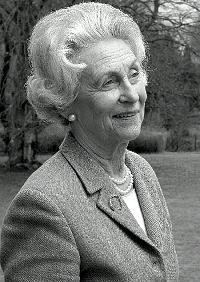
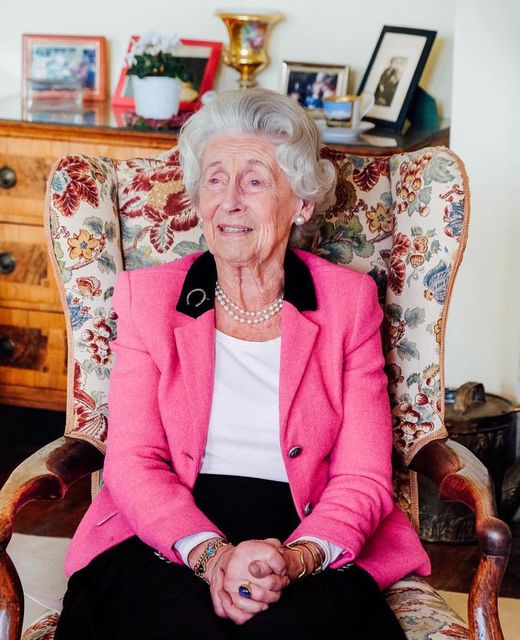
HH Duchess Marie-Alix of Schleswig-Holstein died on November 1 at Gut Bienebeck after a prolonged illness.  She was 98 years old.  Her four children were at her side when she died.

Marlene A Eilers Koenig Collection

Marlene A Eilers Koenig Collection

Marlene A Eilers Koenig Collection


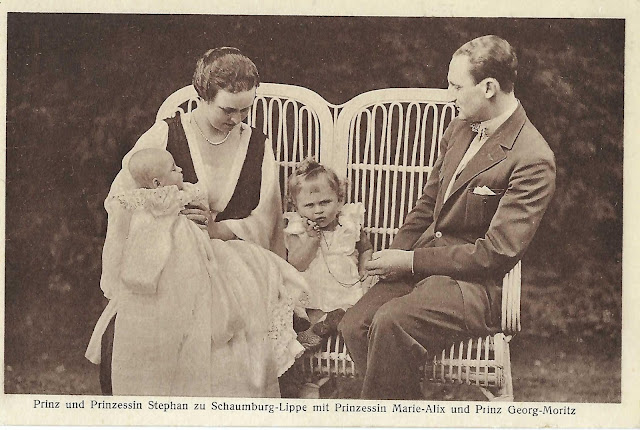
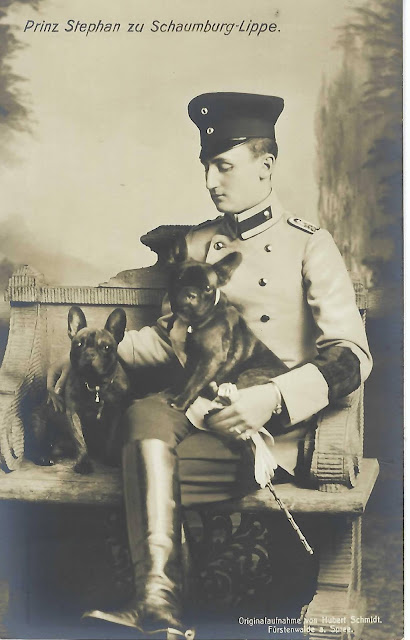
The princess was born HSH Princess Marie-Alix of Schaumburg-Lippe on April 2, 1923, at Bückeburg, the second and youngest child of HSH Prince Stephan of Schaumburg-Lippe (1891-1965), fifth of nine children of HSH Georg, Prince of Schaumburg-Lippe and HH Princess Marie of Saxe-Altenburg.

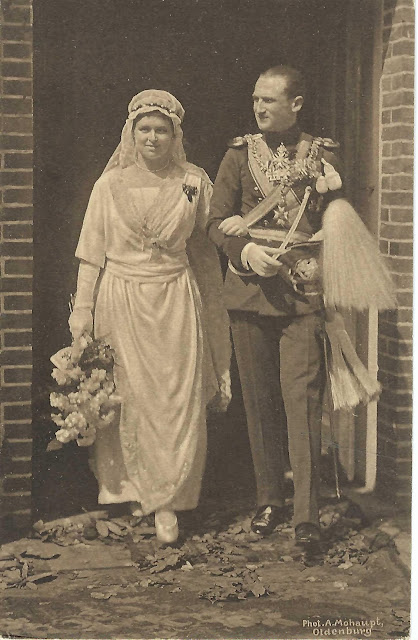
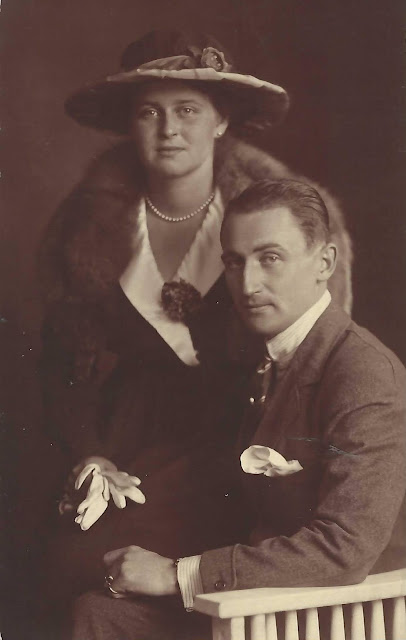
In 1921, Prince Stephan married HH Duchess Ingeborg of Oldenburg (1901-1996).  He was a German diplomat in the 1930s, serving in Sofia, Bulgaria, Rome, Rio de Janeiro, Buenos Aires, and Santiago de Chile.

http://royalmusingsblogspotcom.blogspot.com/2011/06/june-4-1921-marriage-of-prince-stephan.html

From Peter Herzog zu Schleswig-Holstein-Sonderburg-Glücksburg 1922-1980

Marlene A Eilers Koenig Collection


By the end of the second world war, Princess Marie-Alix was living in Lensahn with her mother's family.   It was during this time that she met, HH Prince Peter of Schleswig-Holstein-Sonderburg-Glücksburg (1922-1980), the third but eldest surviving son of HH Friedrich, Duke of Schleswig-Holstein-Sonderburg-Glücksburg and HSH Princess Marie-Melita of Hohenlohe-Langenburg, a great-granddaughter of Queen Victoria. 

German Red Cross


Princess Marie-Alix and Duke Peter (he succeeded his father in 1965) were married in Glücksburg on October 9, 1947.   They settled in Schleswig-Holstein where they raised four children: Princess Marita, Baroness von Plotho (1948), Duke Christoph (1949), Prince Alexander (1953), and Princess Ingeborg, Frau Broschek (1956).  

Stiftung Louisenlund


Duchess Marie-Alix served for many years as the Vice President of the Schleswig-Holstein branch of the German Red Cross and she co-founded the Louisenlund Foundation, (Stiftung Louisenlund) which helps support Louiselund, an internationally renowned boarding school.

http://www.louisenlund.de/en/

In 1949, Duke Friedrich, who was advised by Karl Hahn, built a boarding school on the grounds of one of his properties, Schloss Louisenlund.  Today, Princess Ingeborg is the chairperson of both the Board of Governors and Board of Trustees.  Duke Christoph and Prince Alexander are also members of the Board of Trustees.

She is survived by her four children, nine grandchildren, and several great-grandchildren.

Thursday, September 11, 2014

What will happen to Prince Albert of Schleswig-Holstein

Embed from Getty Images 
 September 11, 1914


What will be the fate of Prince Albert of Schleswig-Holstein, if he is taken prisoner by the Germans, wonders the Marquise de Fontenoy.  He could be shot, she states.  Few officers in the English army now fighting in France have made "such heavy sacrifices or are risking more" than Prince Albert, only surviving son of Prince Christian of Schleswig-Holstein and his wife, Princess Helena, sister of the late King Edward VII.

Prince Christian married Princess Helena, Queen Victoria's third daughter, and fifth child in 1866.  He became a naturalized British subject, and now, in his 80s,  he is the "senior general officer of the English army."

Prince Christian and Princess Helena divided their time between their two homes: Cumberland Lodge at Windsor, and Schomburg House in London.

Their eldest son, Prince Christian Victor, died of enteric fever during the Boer War fourteen years ago, serving as an officer of the King's Royal Rifle corps.  After his older brother's death,  Prince Albert joined the Prussian army as he became second in line, after his father,  to the "extensive estates and property," of Duke Ernst Gunther of Schleswig-Holstein, brother to Empress Auguste Viktoria.  

Albert also is the heir to a "perpetual annuity" of $80,000 a year granted by Prussia's government to the reigning Duke of Schleswig-Holstein forever as a "quid pro quo for their renunciation of the sovereignty of the two duchies of Schleswig and Holstein," now provinces in the kingdom of Prussia.

Prince Albert was educated at Wellington College and then received a commission in the Prussian Cuirassier guards, eventually achieving the rank of colonel.   He was a favorite of Wilhelm II and Auguste Viktoria and is a cousin to both.  Princess Helena is the younger sister of Wilhelm's mother, Victoria, and Prince Christian is Auguste Viktoria's maternal uncle.

When the world war broke out in August,  Prince Albert resigned his German commission. He realized that he was a native of England, educated in England, his mother is a British princess, and his father a naturalized citizen.  After he tendered his resignation, he "sought out and obtained a commission under the British flag."

His decision has meant that he will sacrifice his right of succession and the $80,000 annuity, as well as his cousin's large estates in Germany.    The Duke and Duchess of Schleswig-Holstein do not have any children.

Wilhelm II is said to be "extremely embittered" by Albert's decision, which he considers as "treachery."   Prince Albert had served for nearly 20 years as an officer in the Prussian army.

If Albert is captured, he will likely be treated harshly as Wilhelm II now harbors a deep resentment of his cousin.   Prince Albert has been able "to exercise over both the Kaiser and Kaiserin, enjoying a freedom of speech with them" that few others possessed.   Only the Kaiser's only daughter, Princess Viktoria Luise, Duchess of Brunswick, and his younger brother, Prince Henry, were accorded the same power.

Prince Albert has two younger sisters.  Princess Helena Victoria is unmarried and Princess Marie Luise is divorced from Prince Aribert of Anhalt.  The divorce followed a "scandal" that has kept him away from Berlin ever since.

[Note:  Prince Albert was certainly concerned about his position in Germany, and he received permission from the Kaiser to not fight the British and remained in Berlin for the duration of the war, serving in an office job. On August 9, 1914, The Times reported that Prince Albert had been named as an aide-de-camp to General von Lowenfeld,  the commander of the Corps of Guards in Berlin. ]

Sunday, June 2, 2024

Prince Constantin of Schleswig-Holstein marries Countess Sophia von der Schulenberg

HH Prince Constantin of Schleswig-Holstein-Sonderburg-Glücksburg and Countess Sophia von der Schulenberg were married in a religious ceremony on June 1.  The wedding was held at the Parroquia de Sant Bartomeu in Sóller, Mallorca, Spain.  

More than 200 hundred guests attended the wedding, including the newly married Hereditary Count and Countess Fugger von Babenhausen and Prince Josef-Emmanuel and Princess Claudia of Liechtenstein were among the guests.

The bride wore the Schleswig-Holstein's Bow Tiara, which has been in the family for over 100 years.  Constantin's great-grandmother, Princess Melita of Hohenlohen-Langenburg wore the tiara when she married his great-grandfather, Duke Friedrich of Schleswig-Holstein in 1916.


Marlene A Eilers Koenig collection


The reception was held in the Jardins d'Alfàbia.  The newlyweds drove to the reception in an old Fiat 500 car.  Princess Sophia's father owns a finca in Sóller, and the Holstein family has a vacation home thirteen miles away in Santa Maria.  

The two families have known each other "for ages." Constantin told the German newspaper, Bild. "We met when we were 18 and have always stayed in touch.  And at some point, a close friendship turned into love."

 Sophia's first cousin,  Alix Preuss-Neudorf,  is married to Constantin's younger brother, Prince Leopold.

Prince Constantin is the third of four children of the late HH Prince Christoph of Schleswig-Hplstein-Sonderburg-Gucksburg and Princess Elisabeth of Lippe-Weissenfeld.   Princess Sophia is one of four children of Count Fritz von der Schulenberg and Baroness Franziska von Knigge.   Count Fritz is the CEO & Managing Partner of Jebsen & Jessen

His father died after a long battle with cancer in September 2023.

Constantin told Bild: "For my mother, our wedding is definitely pure joy, but it is also said that my father is not here.  But we have a few items in the program in church and at the celebration that will allow my father to be here some way."    The late Prince Christoph attended Constantin's civil wedding. "We are very grateful that my father was able to witness the birth of Tassilo.  He met the baby, and already got married in March 2023.  We celebrated it in a big way with the family, and he was able to be there too."

The couple's 10-month-old Prince Tassilo arrived at the wedding in a wicker basket pushed by one of the flower girls.

After working for McKinsey for seven years, Constantin started  LAGERLÖWE Self Storage in 2019 in Hamburg.   He has two master's degrees, in economics and management from St. Andrew's University and finance and private equity from the London School of Economics.   Sophia works 

Constantin is the second member of his family to marry in Mallorca.  His uncle, Prince Alexander,  married Barbara Beata Fertsch in San Cabeneta in 1994.


Prince Constantin is a descendant of Queen Victoria.

Victoria - Alfred - Alexandra - Marie Melta - Peter - Christoph - Constantin

I have asked about using one or two of the wedding photos.  I will not violate copyright by lifting the photos from Bild or UltimaHora.  I have provided links to the articles so you can see the images from the wedding.

https://royalmusingsblogspotcom.blogspot.com/2022/12/two-royal-engagements-in-holstein-and.html

https://www.bild.de/unterhaltung/royals-adel/prinz-schleswig-holstein-sonderburg-gluecksburg-feiert-traumhochzeit-6659881dd728e21e1f7685c0?t_ref=https%3A%2F%2Fwww.google.com%2F


https://www.ultimahora.es/noticias/sociedad/2024/06/01/2176191/realeza-mallorca-boda-real-soller.html


Monday, December 28, 2015

Grand Duchess Alexandra of Mecklenburg-Schwerin celebrates


Grand Duchess Alexandra of Mecklenburg-Schwerin in the middle of a family group:

Back row: Duke Christian Ludwig and Duchess Barbara (nee Princess of Prussia), Hereditary Grand Duke Friedrich Franz and Hereditary Grand Duchess Karin

Middle row: Duchess Thyra of Mecklenburg, Princess Elisabeth of Schleswig-Holstein, Grand Duchess Alexandra, Princess Irene of Schleswig-Holstein,  Princess Anastasia of Schleswig-Holstein (nee Mecklenburg), Princess Margaretha of Schleswig-Holstein.

In the front: Duchesses Donata and Edwina of Mecklenburg, Princess Sybilla of Schleswig-Holstein and Prince Friedrich Ferdinand of Schleswig-Holstein.

This photo may have been taken on the occasion of Alexandra's 80th birthday on September 29, 1962.

Saturday, March 13, 2010

One of those lovely family groups

Marlene A Eilers Koenig collection


This group photo was taken in 1961 or 1962 -

Back row: Duke Christian Ludwig of Mecklenburg and his wife, Barbara (nee Princess of Prussia) and Hereditary Grand Duke Friedrich Franz and his wife Karin
Middle row: Duchess Thyra of Mecklenburg, Princess Elisabeth of Ysenburg-Büdingen (nee Princess of Schleswig-Holstein), Grand Duchess Alexandra of Mecklenburg (nee Hannover), Princess Irene of Schleswig-Holstein, Princess Anastasia of Schleswig Holstein (nee Duchess of Mecklenburg) and Princess Margarethe of Schleswig-Holstein
Front row: Duchess Donata of Mecklenburg, Duchess Edwina of Mecklenburg, Princess Sibylla of Schleswig-Holstein and Prince Friedrich Ferdinand of Schleswig-Holstein.

The Grand Duchess of Mecklenburg was one of 38 German royals who were to be rescued by Great Britain in the advent of a Soviet invasion of West Germany. The plans and the list of the 38 royals, prepared by the Foreign Office, were made public.
The list included Prince Philip's surviving sisters, Margarita, the Dowager Princess of Hohenlohe-Langenburg and her children, Theodora, the Margravine of Baden, and her husband and Prince and Princess Georg Wilhelm of Hanover (Sophie) and their children.
Others on the list included the elderly Dowager Duchess of Brunswick-Lüneburg, her son, the Prince of Hanover, his wife, and their six children, and her youngest son, Prince Welf, and his wife Alexandra.

At first glance, some may wonder why these royals were on a protected list. The Hanovers were also British royals, even though in 1917, the family lost their British titles when George V announced the new family name of Windsor, and limited the HRH and the title of Prince and Princess to the children of the sovereign and the grandchildren of the sovereign in the male line (and the Prince of Wales's eldest son's eldest son.) In 1931, the Duke of Brunswick issued a non-binding decree, stating that his male line would continue to use the British titles due to being the only direct male line descended from George III. Members of the Hanover royal family continue to use the older British title: prince or princess of the United Kingdom of Great Britain and Ireland. Most members of the family also continue to seek permission to marry, according to the Royal Marriages Act. In 1956, the present Prince of Hanover's father won a court case that established his right of British citizenship (and the citizenship of about 400 others) due to the Sophia Nationality Act.
Prince Georg Wilhelm did not seek permission to marry when he wed Princess Sophie of Greece and Denmark due to his marriage taking place in 1946, one year after the war had ended. The British King was not interested in hearing from a distant cousin who had fought for Germany.
The Count of Toerring-Jettenbach and Prince and Princess Ludwig of Hesse and By Rhine were also on the list. The Count was the widower of Princess Elisabeth of Greece and Denmark, the sister of Princess Marina, Duchess of Kent. Prince Ludwig and his British-born wife, Margaret were much loved by the British royal family.

 Prince Ludwig's late brother was married to the Duke of Edinburgh's sister, Cecilie.

The Duchess of Mecklenburg was born Princess Alexandra of Cumberland, as well as a Princess of Hanover. The Duchess of Brunswick-Lüneburg was her sister-in-law. She was born Princess Viktoria Luise of Prussia, the only daughter of Kaiser Wilhelm II. In May 1913, she married Prince Ernst August of Hanover, Duke of Brunswick-Lüneburg. Their wedding was the last grand royal occasion before the outbreak of World War I. Viktoria Luise's wedding was also the final meeting between three cousins: Kaiser Wilhelm II, George V, and Nicholas II of Russia.
http://www.telegraph.co.uk/news/uknews/1517842/How-Britain-planned-to-rescue-royal-relatives.html

Friday, July 13, 2012

A lovely Mecklenburg group photo

Marlene A. Eilers Koenig Collection

This photo was taken not long before the death of the Grand Duchess of Mecklenburg-Schwerin in 1963.

Back row: Duke Christian Ludwig of Mecklenburg, his wife, Princess Barbara of Prussia, Hereditary Grand Duke Friedrich Franz and his wife Karin von Schaper

Middle row:  Duchess Thyra of Mecklenburg, Princess Elisabeth of Schleswig-Holstein, Grand Duchess Alexandra of Mecklenburg-Schwerin,  Princess Irene of Schleswig-Holstein, Princess Anastasia of Schleswig-Holstein (nee Mecklenburg), Princess Margaretha of Schleswig-Holstein

In front: Duchess Donata of Mecklenburg, Duchess Edwina of Mecklenburg, Princess Sibylla of Schleswig-Holstein and Prince Friedrich Ferdinand of Schleswig-Holstein.