Wednesday, February 16, 2022

Mail Call

 Here is a selection of Christmas and thank you cards that I have received in the last few months. 


@Royal Palace


@Royal Palace


Monday, February 14, 2022

Royal Romance Speculation - The Ones that Got Away!

Embed from Getty Images


Before the Prince of Wales married Lady Diana Spencer in 1981, he was rumored to be on the verge of marriage with pretty Americans, British aristocrats, and foreign princesses. In one instance, he was reportedly engaged to a princess he barely knew. In June 1977, the Daily Express splashed "Charles to Marry Astrid - Official." The article was written by the paper’s normally reliable political editor, who said the engagement would be announced on the following Monday. Charles and Princess Marie-Astrid of Luxembourg "fell for each other at that first meeting," which allegedly had taken place the year before. The Luxembourg Princess was Roman Catholic, and "a novel constitutional arrangement" would allow the sons to be raised Anglican, and any daughters would be Catholic.

Embed from Getty Images

The story was false. Downing Street and Special Branch officers were able to provide the mole with inaccurate, but plausible, information about the Prince of Wales’s engagement that would be leaked to the paper. The plot worked, and the source was discovered, and "discreetly retired."

Yet, the story would not die, and the palace was obliged to release another statement: "They are not getting married this Monday, next Monday, the Monday after, or any other Monday, Tuesday, Wednesday or Thursday. They do not know each other and people who do not know each other do not get engaged. The Royal Family do not go in for arranged marriages."

Not knowing each other has never stopped the media from reporting the possibility of a royal engagement.

Queen Victoria encouraged marriages outside the traditional royal caste. She wrote to her eldest daughter: "that if no fresh blood was infused occasionally the races would degenerate finally - physically and - morally - for . . . all the Protestant Royal Families were related to each other and so were the Catholic ones!"

It was also a change acknowledged by King George V and Queen Mary. On July 17, 1917, the king wrote in his diary: "I've also informed the [Privy] Council that May and I decided some time ago that our children would be allowed to marry into British families. It was quite a historic occasion."

Then, as now, the American media hungered for news of Britain’s royal family. The New York Times eagerly published reports about the British royal romances. In February 1909, it was reported that Princess Beatrice of Edinburgh, a niece of King Edward VII, was going to marry King Manoel of Portugal. But Beatrice, a younger sister of Queen Marie of Roumania, was already engaged to Prince Alfonso de Orléans-Borbon, a first cousin of King Alfonso XIII of Spain.

Manoel was determined to marry an English princess. The New York Times noted that negotiations were "in progress during King Manoel’s visit at Windsor with a view to his securing an English bride." The princess in question was Princess Patricia of Connaught, "the living embodiment of sweet English girlhood." Patricia was at the castle to meet Manuel, as was Princess Alexandra of Fife, "the other English princess in the running." Although some favored Princess Alexandra, the elder of the two daughters of Princess Louise, the King’s sister, she "is still a child, and the yea and nay ordained by Scripture form her sole contribution to the conversation." 

Patricia, having already turned down King Alfonso XIII of Spain, was not interested in marrying a king. Manoel returned home without an English bride. A year later, he lost his throne in a revolution.


Embed from Getty Images 

In 1910, Princess Alexandra of Fife was linked to Prince Christopher of Greece. A headline, "Anglo-Grecian Romance," touted the engagement as Christopher had spent several weeks as a guest of her parents at Mar Lodge in Scotland. It was noted that Christopher "conceived a very obvious passion for the daughter of the house." This was not the story as related by Prince Christopher in his memoirs. Christopher, a nephew of Queen Alexandra, assumed that a marriage "would meet with everyone’s approval", as Louise’s younger sister, Victoria, had promised, "to arrange everything."

Embed from Getty Images

They "got engaged on the sly," but waited four days before approaching her parents. The Duke of Fife would "dispel any illusion" that Christopher would have in marrying his daughter.

In the early years of the 20th century, most of the press attention was centered on the Prince of Wales, but his younger siblings also received news coverage about possible marriages. In February 1926, the New York Times noted "the engagement of Prince Henry, third son of King George, to Lady Mary Scott, a younger daughter of the Duke of Buccleuch, it is understood, will be announced soon after the period of court mourning for Dowager Queen Alexandra, which ends tomorrow."

This marriage will "undoubtedly prove a popular match in Great Britain, where, since the war, there has been a strong sentiment in favor of royal Princes marrying the daughters of British houses instead of foreign princes."

Tomorrow came and went, and no engagement was announced. Three years later, Prince Henry, who had been created the Duke of Gloucester, was expected to announce his engagement to the Duke of Buccleuch’s youngest daughter, 23- year old Lady Angela Scott, a "pretty brunette who loves open-air life and is a good rider to the hounds." The engagement was "likely to be announced soon," after King George recovered from an illness. The King recovered, but no announcement.


If you are enjoying this article, you can buy me a vanilla latte .. thanks.

It was another Scott sister, Lady Alice who married Prince Henry, the Duke of Gloucester, in 1935.


When Princess Ingrid of Sweden arrived unexpectedly in London in 1932, she quickly "became the most talked-about girl in Great Britain." Some assumed that Ingrid was going to marry King George V’s fourth son, Prince George, Ingrid, whose mother was a British princess, often spent time in England with her grandfather, the Duke of Connaught. This time, Ingrid joined Princess Alice, Countess of Athlone, and her husband, Lord Athlone, and the Prince of Wales and Prince George for an "intimate dinner" at George’s York House apartment. The news of their dinner together only "strengthened rumors of an impending announcement" of Princess Ingrid’s engagement to Prince George.

Ingrid’s father and stepmother were expected to arrive in London a week later, and "it is believed that the engagement will be officially announced soon thereafter." The stories ceased after Ingrid had returned to Sweden. A year later, the paper reported that "there was a persistent rumor in English society that a marriage is being arranged" between Prince George, youngest son of the King, and an American heiress Grace Vanderbilt, daughter of General and Mrs. Cornelius Vanderbilt of New York.

But it was the August 19, 1934, headline that really caught the attention of reporters on both sides of the Atlantic. "Prince George of Britain Sought as Husband for Greek Princess by King of Yugoslavia." The Greek princess in question was Princess Marina, the youngest of three daughters of Prince and Princess Nicholas. "The friendly matrimonial intrigue was directed by King Alexander "who wished to see Prince George marry the 27-year-old Princess Marina."
Embed from Getty Images

On 26 August, Prince George, then in Salzburg, attending a music festival with Prince and Princess Paul and Princess Marina, told a reporter: "There is no truth at all in these rumors."

There are times when no means yes. The official announcement came two days later. The couple was married in November 1934.

The oft-rumored relationship between the then Princess Elizabeth and Prince Philip of Greece was one of the rare occasions when the media was nearly always right.

In his diary in 1941, the American-born Chips Channon wrote: "....Philip of Greece was there. He is extraordinarily handsome .... He is to be our Prince Consort, and that is why he is serving in our Navy." He was spot on, three years before the newspapers began serious speculation about then Princess Elizabeth’s marriage. In September 1945, a New York Times headline read: "Greek Prince’s Name Linked to Elizabeth." The Palace denied that report, just as they denied a report a week earlier that the princess was going to marry the 41-year-old Prince Charles of Belgium. The paper also published a profile of Elizabeth’s future: "Marriage a la Mode Finding a husband today is a problem even for "the most eligible girl in the world."

"Time and time again stories have circulated in the press at home and abroad hinting at impending engagements," wrote Harry Vosser in 1945. "No doubt there will be many more before the engagement of Princess Elizabeth is officially announced from Buckingham Palace. "

Vosser also offered a list of the names who were linked "with the world’s most eligible girl." The first name on the list was 23-year-old Prince Philip. Rumors of the marriage "circulated in diplomatic circles", but were denied by the Palace. The tale "sprang from the fact that before the war Prince Philip spent a lot of time in Britain and during the war spent many leaves at Windsor Castle." Other candidates included "an unspecified American," whose marriage "would strengthen the bonds between the United States and Britain; The Duke of Rutland; the Earl of Euston, and the aforementioned Prince Charles of Belgium.

Embed from Getty Images

The rumors about Philip persisted through 1946. "Despite denials, Princess Elizabeth is believed engaged," headlined one article in November of that year. One month later, a front-page story declared "Princess Elizabeth and Philip to Wed; Troth Delayed." Their intention to "marry was confirmed by sources with close contacts with both the Government and palace, notwithstanding official denials that they are engaged." The delay, according to the report, was blamed on the political situation in Greece. The paper also reported that the prince would become a British subject the following February and would renounce his right to the Greek throne. At that time, the Princess would be in South Africa with her parents and younger sister.

The official announcement came on July 9, 1947. "Everyone has been gossiping and speculating about this royal romance for months. Royalty live like goldfish in a Bowl and there was not a shopgirl or clerk who could not have told you long ago that Elizabeth was in love with her cousin Philip and that she was determined to marry him," was the comment in The New York Times front-page story.

The late Princess Margaret would also be the subject of marital interest. In 1948, rumors of Margaret’s engagement to Prince Georg of Denmark, "became stronger" after he had been assigned "at his own request" as a military attache at the Danish Embassy in London. For some months, he had been seen "frequently in the company of Princess Margaret." It was understood, at least according to the report, that the engagement would not be announced until after Margaret’s 18th  birthday in August of that year. Prince Georg, who was ten years Margaret’s senior, was married in 1950 to Margaret’s cousin, Anne Bowes Lyon.


Although Britons "were all aflutter" with newspaper reports in 1952 that Margaret was planning to marry the Earl of Dalkeith, Buckingham Palace issued a statement denying the story. "Therefore there is nothing to be said except that this young man has been invited to Windsor. Thus, a dinner invitation does not mean an engagement will follow.

Embed from Getty Images 

The Princess would also be linked to a German prince, Henry of Hesse, in 1959 after she spent time with him during a five-day Roman holiday. "Protocol offices and British diplomats were aflutter and romantic Romans were delighted" by the alleged romance. Henry, a distant cousin, was a successful artist and scenic designer. The prince was merely acting as Margaret’s host, as she was already involved in a relationship with Antony Armstrong-Jones.

The late Duke of Windsor was perhaps subjected to more rumors about marriages than any other royal. Nearly every eligible European princess from Astrid of Sweden to Beatriz of Spain was considered fair game. According to one recent biographer, the Prince of Wales "had never given serious thought to marriage with a suitable royal princess." Although King George V and Queen Mary had approved of their children marrying non-royals, apparently the word never got to David. He did have a serious relationship in 1918 with Lady Rosemary Leveson-Gower, although Queen Mary had cautioned him against marrying her. A year later, when Rosemary’s engagement was announced, David wrote to his then mistress, Freda Dudley Ward: "I can't help feeling a little sad .... she was the only girl I felt I ever could marry & I knew it was défendu (forbidden) by my family."

Queen Mary's opposition was due to "a taint of blood in her mother’s family."

King George V was not known as a great communicator, especially with his children, and it was not until 1932 that he asked David if he had ever thought about marrying an English woman. The Prince of Wales replied, "that he had never supposed it would be possible."

In a New York Times editorial, "Whom will the Prince choose," the writer weighed carefully the options available to the heir to the throne, and concluded that "the idea of limiting the Prince’s choice to the circle of the blood royal is generally poohed-poohed."

The Prince of Wales' important relationships were sadly confined to married women, although at the time, the British press remained reverential in its coverage of the royal family. It would have been unthinkable at that time to have reported on the Prince’s misalliances.

In 1919, reports of the "impending engagement" of the Prince of Wales and Princess Jolana of Italy were "unfounded." The Prince of Wales, then on a visit to Paris, wrote to Freda Dudley Ward: "French papers are full of my engagement to the Queen’s [of Italy] eldest girl being as good as official today!!!! .... it naturally infuriates me particularly as the girl has a face like a bottom."

As early as 1916, the New York Times wrote that the Prince of Wales was to "seek the hand" of Princess Jolanda. This rumor came as a surprise to the Italians because it "was supposed that the British prince would marry one of the daughters of Emperor Nicholas II of Russia." A year later, the Prince "answered for himself the question whom he will marry." One London paper’s story, which was reported in the New York Times, said that David "has decided to ask for the hand of his first cousin, Princess Maud." In 1920, the American paper republished comments from a Times editorial suggesting that it was time for the Prince of Wales to marry, preferably an English girl. At the time, the favorite was a war widow, 31-year-old Lady Joan Mulholland, a lady-in-waiting to the Prince’s sister, Mary, and "the prettiest woman at court." The second choice was Lady Dorothy Cavendish, a daughter of the Duke of Devonshire. She appeared as a possible candidate because: "the Prince is said to have paid her attention during his Canadian trip."

"As matters stand, she need not be of royal blood. But she must be of royal demeanor. She must know by instinct what to do and when and how.... She must dazzle without being dazzled, "was the view of the author of a 1922 profile "The Prince, Prize Matrimonial. In January 1922, a newspaper headline read: "Prince of Wales to Wed Daughter of Scotch Earl." The engagement would be made official in the "next two to three days," and it was noted that the young woman in question, Lady Elizabeth Bowes-Lyon, 22, was once "reported engaged to the Duke of York."

This was a case of the right girl, the wrong prince. A few months later, Lady Elizabeth became engaged to the Duke of York.


Embed from Getty Images 

  Although the future Edward VIII never made an effort to give up his married mistresses, marry, and produce an heir, newspapers continued to report on romances that never were and never would be. When he visited Wales in May 1934, it was reported that there would be a "forthcoming announcement" of an "engagement with a young lady not unconnected with Wales." The prince had stayed with Lord and Lady Blythswood, the parents of a comely daughter, the Hon. Olive Douglas-Campbell. Lady Blythswood was rather blunt about the story: "There is no truth whatever in the rumour."

Three years before her alleged engagement to Prince George, Princess Ingrid of Sweden’s engagement to the Prince of Wales was "forecast" to be imminent. The Princess and her father and stepmother had dined with the Prince of Wales, and "belief is growing in some quarters here that announcement of the engagement" would be made in "the next two weeks."

It was also reported that the Prince of Wales was going to marry Princess Astrid of Sweden, "one of the prettiest girls in Europe, a keen sportswoman and a delightful dancer." Astrid had visited England as a guest of Queen Alexandra, but David "hardly went near her." Infanta Beatriz of Spain, whose grandmother, Princess Beatrice, was Queen Victoria’s youngest child, was also rumored to be the princess most likely to marry the Prince of Wales. Her father, King Alfonso XIII, would not allow her to visit London because "of rumors linking her with the Prince."

Even after succeeding to the throne -- and most of the world was aware of his relationship with Wallis Simpson - the media still offered hope of a royal marriage. "King Edward VIII may don his crown of England next May with a second cousin kneeling at his side," reported the New York Times on July 4, 1936. The two Princesses, "both talented and beautiful," named as the favorites to marry the king were Princess Frederika of Hanover, a granddaughter of the exiled Kaiser Wilhelm II, and Princess Alexandrine Louise of Denmark. Some months earlier, Alexandrine’s father, Prince Harald had "vigorously denied" the story, although the rumors persisted until August 1936 when Alexandrine’s engagement to Count Luitpold zu Castell-Castell was announced. The other "co-favorite" Princess Frederika married then Crown Prince Paul of Greece in January 1938.


Alexandrine of Denmark


Given the Duke of Windsor’s eventual marital partner, the American-born Wallis Warfield Simpson, it is rather amusing to note that in 1919 a New York Times headline read: "Suggests Wales Wed an American." The newspaper was reporting on several stories published in the British press that suggested the Prince of Wales should marry an American woman. "The fact is that there is a keen desire that the Prince shall be allowed to choose for himself a British wife " if not an American. His marriage to a British bride would be exceedingly popular. If he should choose an American bride, the enthusiasm on both sides of the Atlantic would be unbounded and the dramatic possibilities would be opened up. The example would be infectious, and there is no telling where the consequences would end."

The "dramatic possibilities" led to the King’s abdication in December 1936. The consequences culminated with his marriage to a twice-divorced American woman. 


< If you liked this article, I would love a vanilla latte ... thanks

Sunday, February 13, 2022

A noble engagement

Linkedin


Countess  Lioba Maria Walburga Nina Elisabeth von Waldburg zu Wolfegg und Waldsee  is engaged to Count Bodo von Brockdorff.   The couple got engaged in January.

She is the eldest child of Count Jakob Heinrich Wunibald Maria Josef Rupert Leonhard von Waldburg zu Wolfegg und Waldsee and Countess Eilika of Solms-Baruth.  Lioba was born on October 14, 1994 in Frankfurt-am-Main and has two younger brothers, Count August and Count Theodor and a younger sister, Countess Laetitia.

In 2021, Lioba graduated from the Hochschule für Technik und Wirtschaft in Berlin with a Bachelor or of Applied Science.  She is a  graphic designer with Charly education in Berlin.

@kurabu


Count Bodo is also a graduate of the Hochschule für Technik und Wirtschaft in Berlin, where he received a BS in Industrial Engineering and Management in 2018.  He is the Managing Director/COO of KURABU, which empowers " Clubs to reduce work, engage with members and grow revenues."

He is the son of Count Bertram Joachim von Brockdorff and Renata  Maria Constance Beate von Samson-Himmelstjerna.

Bodo's brother Count Philipp, proposed to Countess Philippa von Neipperg on New Year's Eve 2021.

http://royalmusingsblogspotcom.blogspot.com/2022/01/a-countly-engagement.html

Princess Astrid of Norway celebrates her 90th birthday


@Sven Gj. Gjeruldsen / The Royal Court


Crown Princess Martha of Norway gave birth to her second daughter today at Villa Solbakken in Oslo, reports the Associated Press.    She and her husband, Crown Prince Olav, are also the parents of Princess Ragnhild-Alexandra, who was born in 1930.

Crown Prince Olav is the only child of King Haakon VII and Queen Maud, who is the daughter of the late King Edward VII of the United Kingdom.  He married Princess Martha, his first cousin, the daughter of Prince Carl and Princess Ingeborg of Sweden in 1929.


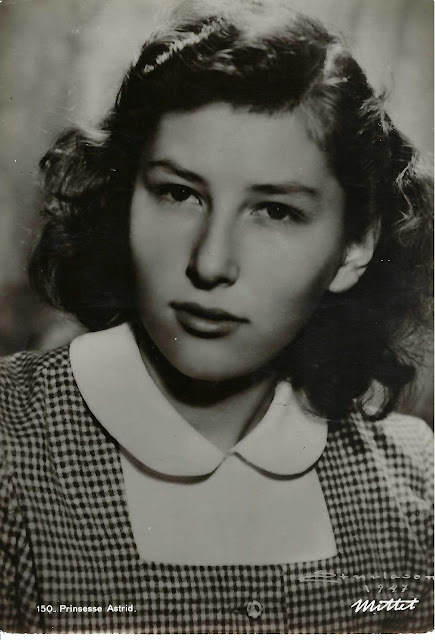


All of these images are from the Marlene Eilers Koenig Collection


The new princess was born at 4:36 a.m. this morning.  Her birth took the royal family  "as well as the nation by surprise, only yesterday a court circular was published directing all clergymen to pray for the Princess on next Sunday."

Only two days ago,  Crown Princess Martha attended a public concert, and last evening, she and the Crown Prince visited their new home,  Skaugum, located just outside Oslo.   The Princess went into labor shortly afterward and gave birth a few hours later.


@Sven Gj. Gjeruldsen / The Royal Court

Embed from Getty Images Embed from Getty Images Embed from Getty Images Embed from Getty Images Embed from Getty Images Embed from Getty Images


If you liked this post, perhaps you can buy me a peppermint latte   


https://www.royalcourt.no/artikkel.html?tid=28755&sek=27292


https://royalmusingsblogspotcom.blogspot.com/2017/02/princess-astrid-of-norway.html

https://royalmusingsblogspotcom.blogspot.com/2012/03/name-for-new-princess.html

https://royalmusingsblogspotcom.blogspot.com/2011/01/princess-astrid-marries-divorced.html

https://royalmusingsblogspotcom.blogspot.com/2015/01/johan-martin-ferner-1927-2015.html


Thursday, February 10, 2022

The marriage of the Queen

February 10, 1840


Queen Victoria and Prince Albert were married today at noon at the Chapel Royal, St. James's Palace reports The Times, which also notes that this wedding is a "most important and national event."

The Times correspondent also notes that "since the marriage of Her Royal Highness the late Princess Charlotte of Wales, there has been no occurrence connected with the Royal Family of England which excited so great an interest.

Every "public approach" to Buckingham Palace was crowded with well-wishers, loyal subjects, "anxious to obtain, if possible, a view of the bridal procession."

His Royal Highness Prince Albert emerged from the Palace to cheers. He was escorted to St. James's by a "small escort of Horse Guards," and he was accompanied by his father, the Duke of Saxe-Coburg and Gotha, and his older brother, Prince Ernst.  Sadly for the crowd, the "windows of the carriages" were closed, and the royal party "were only partially  recognized."

Embed from Getty Images 

 At a quarter past twelve, the band in front of Buckingham Palace struck up "God save the Queen," and there were "tremendous shouts" from the crowd.  Queen Victoria was entering her carriage, ready to leave for St. James's "to plight her troth" to His Royal Highness Prince Albert of Saxe-Coburg and Gotha.

She was "most enthusiastically cheered" as the carriage traveled the short distance to the Chapel Royal. Members of the Royal family gathered at the front of the chapel to witness the event.  The Queen's mother, the Duchess of Kent, sat on her left, and on Prince Albert's right, the Dowager Queen Adelaide sat. The Dukes of Sussex and Cambridge were on the Queen's "extreme left," and to Prince Albert's extreme right, the Duke of Saxe-Coburg and Gotha, the Hereditary Duke, and Their Royal Highnesses, the Duchess of Cambridge, Prince George of Cambridge,  Princess Augusta and Princess Mary Adelaide of Cambridge.

The floor of the chapel was covered with "rich purple and gold carpeting."


At half-past 11, the Archbishops of Canterbury and York and the Bishop of London took their places behind the altar.  Several minutes before noon, the Dowager Queen entered the Chapel and was escorted to her seat. She wore a "robe of rich silk purple velvet trimmed with ermine."


Prince Albert's procession entered the church at 12:25 p.m., following a trumpet fanfare.  Another fanfare announced Queen Victoria's procession, which included pages of honor, the Lord High Chamberlain, the Garter at Arms, the Earl Marshal and members of the Royal Family, Her Highness, Princess Sophia Mathilda of Gloucester, Her Royal Highness Princess Mary Adelaide of Cambridge, Her Royal Highness Princess Augusta of Cambridge, His Royal Highness Prince George of Cambridge,  Her Royal Highness the Duchess of Cambridge, Her Royal Highness the Duchess of Kent, Her Royal Highness the Duchess of Gloucester, Her Royal Highness the Princess Augusta, His Royal Highness the Duke of Cambridge and His Royal Highness the Duke of Sussex.

The Queen's train was carried by 12 unmarried Ladies: Lady Adelaide Paget, Lady Sarah Villiers, Lady Frances Cowper, Lady Elizabeth West, Lady Mary Grimston, Lady Eleanora Paget,  Lady Caroline Lennox, Lady Elizabeth Howard, Lady Ida Hay, Lady Catherine Stanhope, Lady Jane Bouverie, and Lady Mary Howard.

Princess Sophia Mathilda was cheered.  Princess Augusta of Cambridge "excited general admiration by her affability and beauty."  Her Aunt, Princess Augusta was cheered.  Although the Duchess of Gloucester's name appeared in the official details of the ceremony, she was "confined by a severe cold to her house" for the last two weeks.

The Duchess of Cambridge led her young daughter, Princess Mary, by the hand, and "the mother of so beautiful a child was certainly not to be without interest."

There was also "every sympathy" for the bride's mother, the Duchess of Kent, who appeared "somewhat disconsolate and distressed."  The Duke of Sussex, who gave the bride away, was in "excellent spirits."

Lord Melbourne carried the sword of state, but The Times noted that "little attention was paid to him.  Queen Victoria was next to come down the aisle, "looking anxious and excited,"  She also looked "paler than usual."

Embed from Getty Images 

 Victoria wore a dress of "rich white satin, trimmed with orange-flowers blossoms."  On her head, was a wreath of orange blossoms, over which, "but not to conceal her face, a beautiful veil of Honiton lace was thrown."  Her bridesmaids and train bears were "similarly attired but without veils.


The Queen wore no jewels, apart from the collar of the Garter.

The couple exchanged their vows, according to the rites of the Church of England. When the Archbishop of Canterbury asked "Who giveth this woman to this man?" the Duke of Sussex, one of the Queen's surviving uncles, stood up, walked to the altar, and took the Queen's hand, and responded: "I do."

The service continued with the exchange of rings.  Prince Albert said: "With this ring, I thee wed, with my body I thee worship, and with all my worldly goods I thee endow; in name of the Father, and of the Son, and of the Holy Ghost. Amen."

After the ceremony, members of the Royal Family gathered at the altar to offer their congratulations to the newlyweds.  The Duke of Sussex shook his niece's hand, "which appeared to have a little ceremony, but with cordiality in it. He also kissed her cheek.


Queen Victoria quickly walked over to the other side of the altar where Queen Adelaide was standing and kissed her.

Prince Albert joined her and took Victoria's hand. The newlyweds left the chapel to return to Buckingham Palace for the wedding breakfast, which was attended by the Royal family, Albert's father, and brother.

After breakfast, preparations were made for the newlyweds' departure for Windsor.  Queen Victoria and Prince Albert left the palace at 3:45 p.m., for the journey to Windsor.

The Queen's wedding dress was "of white satin, with a very deep trimming of Honiton lace, in a design similar to that of the veil.  The body and sleeves were richly trimmed with the same material to correspond. The train was of white sating, and was also lined with white satin trimmed with orange blossoms."   The satin was made in Spitalfields.


If you liked this article, perhaps you can buy me a peppermint latte!! Thank you

Tuesday, February 8, 2022

Royal Visits to the US --


Embed from Getty Images

Embed from Getty Images


Queen Elizabeth II's visits to the US are featured in the next issue of the White House History Quarterly.  For more information, including how to order, please click here:


May 1991  @Marlene Eilers Koenig


Sunday, February 6, 2022

The King is dead Long Live the Queen!

Embed from Getty Images Embed from Getty Images Embed from Getty Images 
  
Embed from Getty Images

King George VI is dead.   He died "peacefully in his sleep" at Sandringham, his estate in Norfolk.  He was 56 years old.

Four months the King underwent an operation to remove a growth on his right lung.  The doctors had to remove the entire right lung.   His recovery "seemed assured."  On January 31, he accompanied Queen Elizabeth to London Airport to say goodbye to his elder daughter, Princess Elizabeth, and her husband, the Duke of Edinburgh as they boarded a plane to East Africa, which was to have been the first stop of a tour that would also have included Australia and New Zealand.

Princess Elizabeth and the Duke of Edinburgh were in Kenya when they learned of the King's death.  They are now on their way back to London.

The new queen is 25-years-old and the mother of two young children, Prince Charles and Princess Anne.  As the new heir apparent,  3-year-old Prince Charles is now the Duke of Cornwall.   

George VI was devoted to his two grandchildren who have been at Sandringham since their parents left for East Africa.
New York Times February 7, 1952


It was a servant who discovered that the king was dead.  He entered the king's bedroom, bringing the king's morning tea when he discovered his lifeless body.

Dr. James Amsell, the Surgeon Apothocary, stated that the king died "in his sleep without pain."

The news tickers announced the death at 10:45 a.m., which was followed 30 minutes later by the British Broadcasting Corporation.  

By noon, flags were at half-staff on all official buildings except for Marlborough House, the residence of Queen Mary, the late King's mother.   Her standard remained at the top of the flagpole, "a dauntless symbol of the continuity of the British Crown and her own indomitable spirit."

The official announcement in the Court Circular stated: "The King passed peacefully away in his sleep early this morning."


Embed from Getty Images
Embed from Getty Images Embed from Getty Images Embed from Getty Images Embed from Getty Images Embed from Getty Images 


Tuesday, February 1, 2022

5 weeks of court mourning for the Duke of Fife

Embed from Getty Images

 February 1, 1912


King George V has ordered five weeks of court mourning for his brother-in-law, the Duke of Fife.  This has "caused surprise" as it is longer than the "period commanded for the Duke of Teck, Queen Mary's father,"  reports the New York Times.

The period of mourning will end on March 6 and will affect only two "great official functions," the service of thanksgiving at St. Paul's and the opening of Parliament.  It will, however, require the postponement of events at Court, including levees.

The Duke of Fife died on January 29 at Aswan, Egypt.  He was 62.  In December, the Duke and his wife and two daughters were on board the SS Delphi, which was shipwrecked off the coast of Morocco.  The passengers spent several hours in the water before they were rescued. But once on land, they had to walk for four miles before finding a place to stay.   The Duke soon became ill with pleurisy, most likely due to the shipwreck.

Alexander Duff, 1st Duke of Fife, was born in Edinburgh on November 10, 1849, the son of  James Duff, 5th Earl of Fife, and Lady Agnes Hay, the third child of William Hay, 18th Earl of Erroll, and Elizabeth Fitzclarence, one of William IV's illegitimate children.

He succeeded his father as the 6th Earl of Fife on August 7, 1879.    

On July 27, 1889, Lord Fife married his third cousin, Princess Louise of Wales, the third child and eldest daughter of the then Prince and Princess of Wales.   

  Embed from Getty Images


On the morning of the wedding, Queen Victoria elevated Lord Fife to a Dukedom: Duke of Fife and Marquess of Macduff.

Princess Louise gave birth to three children:  a stillborn son, Alastair (1890), and two daughters,  Alexandra (1891) and Maud (1893).   In April 1900, Queen Victoria recreated the Fife dukedom with the earldom of Macduff,  with a special remainder to his two daughters and their male heirs


  Embed from Getty Images 

On November 9, 1905, King Edward VII created Louise as Princess Royal and decreed that her daughters were now Princesses with the style of Highness.

HH Princess Alexandra succeeded her father as the 2nd Duchess of Fife. She will celebrate her 21st birthday on May 17.