January 29, 1964
Princess Irene, second daughter of Queen Juliana of the Netherlands, has become a Roman Catholic, according to an announcement made today by the palace.
The New York Times reports that the "disclosure of Princess Irene's decision caused a sensation" in the Netherlands, where "the House of Orange, which has reigned for more than three centuries, is traditionally Protestant."
The 24-year-old Princess is second in line to the Dutch throne after her sister, Crown Princess Beatrix. She was until recently a member of the Dutch reformed church, as are "other members of the royal family."
In a statement released by Queen Juliana and Prince Bernhard, said that "after long consideration the Princess had concluded she preferred Catholicism."
Although the date of her conversion was not announced, it is understood to have taken place last September.
This announcement has given "new impetus to Dutch press reports" that Princess Irene, currently on vacation in Spain, is about to announce her engagement to to a 25-year-old Spanish nobleman Don Juan Bosco Alvear, a Roman Catholic.
The reports have been "denied" by the Princess and by Don Juan's family.
The Dutch constitution "bars a prince or princess from succession" if he or she "marries without the approval of both houses of Parliament."
Wednesday, January 29, 2014


Rumors revived about a reconciliation between Carol and Helen
January 29, 1934
Former Queen Helen of Romania "personally accompanied Prince Michael" when they left Florence by automobile planning to return to Romania by Sunday, reports the Associated Press.
This has led to new rumors about a reconciliation between King Carol II and his former wife. Princess Helen was "silent on the matter" and it is not known if she "intends to go all the way to Bucharest."
Crown Prince Michael has been visiting his mother in Florence for the last month.
Princess Charlotte and Prince Pierre in Baltimore
January 29, 1928
Princess Charlotte of Monaco and her husband, Prince Pierre, have arrived in Baltimore, and are the guests of Mrs. John W. Garrett, at her home, Evergreen, reports the New York Times.
They are in Baltimore for "a rest after a round of social affairs in New York."
Princess Charlotte is the only child of the Prince Louis, the sovereign of the tiny principality. She and her husband are expected to leave for Washington, D.C., tomorrow, where they will be "entertained by Senator and Mrs. William Cabell Bruce.
The Prince and Princess are also expected to visit Mount Vernon.
A practical Princess: saving Burg Namedy
A Deutsche Welle interview (in English) with Heide Prinzessin von Hohenzollern, widow of Prince Godehard of Hohenzollern. (The marriage was unequal according to house law.)
http://www.dw.de/a-practical-princess-in-a-modern-world/a-17391177
Hereditary Prince Reuss zu Greiz and his sisters
 |
| Marlene A. Eilers Koenig Collection
Heinrich xxiv, Hereditary Prince Reuss (Elder Line) with his sisters, Princesses Emma, Marie, Karoline, Hermine and Ida. They were the children of Heinrich XXII, Prince Reuss zu Greiz (1846-1902) and Princess Ida of Schaumburg-Lippe (1852-1891). The Princess Reuss died three weeks after giving birth to her youngest daughter.
|
Tuesday, January 28, 2014
Father and son are brothers-in-law
January 28, 1914
Gebhard Lebrecht, Prince Blücher von Wahlstatt, "a well-known German nobleman and a descendant of the Prussian hero of Waterloo," recently became the brother-in-law of his own son, reports the New York Times.
In January 1913, Count Lothar Blücher von Wahlstatt married Princess Ludowika Radziwill, who is the elder sister of his stepmother, Princess Wanda Radziwill, whom his father married in 1895 at St. Petersburg.
Count Lothar is the Prince's son by his second marriage.
It is a very complicated relationship. Not only is Count Lothar his father's brother-in-law, but "he is also the uncle of his younger siblings, and as the husband of his aunt, he becomes his own uncle."
If Count Lothar and his wife have a child, he will become "the latter's great-uncle and also his cousin."
Prince Blücher, who was born in 1836, has been married three times. He has five children, Countess Marie Ferdinandine, Countess Karoline,Count Gebhard, Count Gustav and Count Ferdinand, by his first wife, Princess Marie von Lobkowicz, who died in 1870. His second wife was Countess Elisabeth von Perponcher-Sedlnitzky, whom he married in 1889. They had two children: Count Lothar and Countess Gebhardine.
Elisabeth died in March 1894. A year later, Prince Blücher married Princess Wanda Radziwill, who was born in 1877. They have three young children, Countess Elisabeth, Countess Wanda, and Count Hubert.
A third child for the Vendomes
French royal sources are reporting that the Duke and Duchess of Vendome are expecting their child later this year.
Prince Jean and his wife, Philomena (nee Tornos y Steinhart) are the parents of Prince Gaston (2009) and Princess Antoinette (2012.)
Planning, Planning, Planning
Yes, I am going to admit it: I turn the BIG 6-0 in June. Not that I have a choice about this. Of course, I want to go to London in late May, but the airfares from Washington, D.C., are absolutely way too high: at least $1300 with my AARP discount.
I have tried a myriad of airline fare search engines but the fares ... I cannot believe how high they are (blame it on all the fees.)
It will be years before I can earn a trip with enough airline miles. Depressing to say the least.
Even more depressing than turning 60.
Monday, January 27, 2014

Text of the Act of Reconciliation
ACT OF FAMILY RECONCILIATION OF THE HOUSE AND DYNASTY OF BOURBON-TWO SICILIES
ON THE ONE PART HRH Prince Don Carlo of Bourbon Two Sicilies, Duke of Castro, and his Consort HRH Princess Donna Camilla, Duchess of Castro, both on their own behalf and in personal and dynastic representation, and on behalf of their daughters HRH Princess Donna Maria Carolina of Bourbon-Two Sicilies, Duchess of Palermo and HRH Princess Donna Chiara of Bourbon-Two Sicilies, Duchess of Capri.
AND ON THE OTHER PART HRH Prince Don Pedro of Bourbon-Two Sicilies, Duke of Noto, on his own behalf and on behalf of His Father HRH Prince Don Carlos of Bourbon-Two Sicilies, Duke of Calabria, Infante of Spain, by whom he has been expressly delegated to complete this RECONCILIATION, together with his spouse HRH Princess Dona Sofia, Duchess of Noto, and their son HRH Prince Don Jaime of Bourbon-Two Sicilies, Duke of Capua.
BOTH PARTIES, animated by a desire for family and dynastic rapprochement and reconciliation between the two branches of the Royal House of Bourbon - Two Sicilies, which, due to historical circumstances, misunderstandings and misconceptions by family members, has been for many years the subject of disputes both personal and among its supporters:
BEING AWARE that the divisions and disputes between the two branches produced nothing except greater division and loss of prestige for the dynasty, aside from the good example of family harmony that is expected from such a distinguished Royal House.
UNDERSTANDING that on the one hand in accord with the times and because the judgment of history requires them to leave evidence of a good example and harmony and on the other hand because the division between the Constantinian knights and dames militating within the Sacred Military Constantinian Order of Saint George is harmful to the Order and its aims .
BOTH SIDES BEING AWARE of the continuous efforts of our recent Popes and, in particular, of our present Holy Father, Pope Francis, in favour of the re- evangelization of Europe and of the unity of all Christians
DECLARING their common desire for reconciliation, as a family and as Constantinians of both branches and to put an end to the rivalries and misunderstandings between family members and their supporters , in a renewed Constantinian and Catholic spirit of service to the Holy Church and spreading our Holy Faith.
CONFIDENT on the part of both that Divine Providence is charged with indicating the way to dynastic unity of the Royal House of Bourbon-Two Sicilies
AGREEING that both parties shall in the meanwhile put all their efforts to a dynastic and family commitment towards achieving a spirit of harmony and understanding not only between themselves but also between their followers and supporters , RECOGNISING RESPECTIVELY AS COUSINS THE TREATMENT AND TITLES PRESENTLY USED BY BOTH PARTIES AND THEIR DESCENDANTS, ACTING PUBLICLY TOGETHER AS A SINGLE FAMILY .
And in good faith and family concord to invite to join in this ACT OF RECONCILIATION all the members of the dynasty of Bourbon-Two Sicilies, to whom both parties will make known this private ACT OF RECONCILAITION
Signed at Naples the 24 January 2014.
Saturday, January 25, 2014
Official photos from the signing of the reconciliation

 |
| Including Prince Jaime, Duke of Capua, Casimiro his wife , and sons, Pss Teresa and her daughter and Beatrice, Princess Napoleon and Princesses Maria Carolina and Maria Chiara, Duchesses of Palermo and Capri. Princess Ines (without her husband who was looking after their daughters) and Archduchess Maria and Archduke Simeon were delayed by travel problems but attended the dinner at the Circolo dell'Unione offered by the Duke of Capua, afterwards as did Dom Duarte, Duke of Braganza, and Princess Maria Gabriella of Savoy. |
 |
| The Duke and Duchess of Castro and the Duke and Duchess of Noto |

 |
| The Duke of Noto, Duchess of Castro, Duchess of Calabria and Duke of Castro |
The actual signing took place at 6:15 pm.
Please do not lift, steal, use these photos. They are copyrighted and no one else has the rights to use them without the permission of the copyright holder.
Friday, January 24, 2014
Royal Musings exclusive: RECONCILIATION IN THE HOUSE OF BOURBON-TWO SICILIES
January 25, 2014 [Exclusive to Royal Musings, the first English-language source to report this story]
A historic reconciliation took place yesterday (Friday) in Naples, Italy, between rival branches of the former reigning royal house of Bourbon-Two-Sicilies, a division that began with a marriage.
Yesterday (January 24) in Naples, the day before the ceremony of Beatification of the Venerable Servant of God Maria Cristina of Savoy(mother of Francisco II, and much loved by the Neapolitans), the Duke of Noto and the Duke of Castro signed an act of reconciliation at 5:30 p.m., at the Excelsior Hotel.
[The Beatification ceremony will take place today at 11:00 a.m., at the Basilica of Santa Chiara in Naples.]
On February 14, 1901, Infanta Maria de las Mercedes of Spain, Princess of Asturias, married her second cousin, Prince Carlo of Bourbon-Two-Sicilies, nephew of the de jure King of the Two Sicilies. Carlo was elevated to the rank of Infant of Spain.
The marriage was not without controversy in Spain, as Carlo's father had strong ties to the conservative Carlist movement. But it was a marriage that was actively encouraged by Mercedes' mother, Queen Maria Cristina, and Infanta Isabel. Mercedes (1880-1904) held a unique position in Spain. Her father, King Alfonso XII's death in 1885 led to a succession crisis, as he had two young daughters, Mercedes, and Maria Teresa, and a young, pregnant widow, Queen Maria Cristina. If Queen Maria Cristina's third child was another daughter, Mercedes would succeed as Queen of Spain.
A historic reconciliation took place yesterday (Friday) in Naples, Italy, between rival branches of the former reigning royal house of Bourbon-Two-Sicilies, a division that began with a marriage.
Yesterday (January 24) in Naples, the day before the ceremony of Beatification of the Venerable Servant of God Maria Cristina of Savoy(mother of Francisco II, and much loved by the Neapolitans), the Duke of Noto and the Duke of Castro signed an act of reconciliation at 5:30 p.m., at the Excelsior Hotel.
[The Beatification ceremony will take place today at 11:00 a.m., at the Basilica of Santa Chiara in Naples.]
 |
| Marlene A. Eilers Koenig Collection |
On February 14, 1901, Infanta Maria de las Mercedes of Spain, Princess of Asturias, married her second cousin, Prince Carlo of Bourbon-Two-Sicilies, nephew of the de jure King of the Two Sicilies. Carlo was elevated to the rank of Infant of Spain.
The marriage was not without controversy in Spain, as Carlo's father had strong ties to the conservative Carlist movement. But it was a marriage that was actively encouraged by Mercedes' mother, Queen Maria Cristina, and Infanta Isabel. Mercedes (1880-1904) held a unique position in Spain. Her father, King Alfonso XII's death in 1885 led to a succession crisis, as he had two young daughters, Mercedes, and Maria Teresa, and a young, pregnant widow, Queen Maria Cristina. If Queen Maria Cristina's third child was another daughter, Mercedes would succeed as Queen of Spain.
 |
| Marlene A. Eilers Koenig Collection |
The Queen was safely delivered of a son, Alfonso XIII on May 17, 1886. Briefly on the cusp of becoming a child Queen, Mercedes remained Princess of Asturias, heiress presumptive, to the throne until her death.
Young Alfonso suffered from illness and a weak constitution, and many assumed he would not survive childhood. Mercedes' position - and her marriage - remained paramount. The young infanta needed to marry another Borbon if she were to become queen.
Infanta Mercedes and her younger sister, Infanta Maria Teresa, were presented to society at a ball hosted by Queen Maria Cristina at the Royal Palace. The two infantas had grown up in a conservative and restrictive atmosphere with few friends outside the palace. It is not a surprise that Mercedes fell in love with Prince Carlo, who was a guest at the ball. He asked her to dance, and she melted.
Carlo and his brothers had moved to Spain to further their military careers and both he and his elder brother had distinguished themselves in Spanish military campaigns during the 1890s. The couple's engagement was announced on December 14, 1899. It was not welcomed by Spanish liberals as Carlo's father, the Count of Caserta, had served as a chief of staff in the final Carlist war when Carlist troops had looted the Spanish city of Cuenca.
Mercedes was perplexed by the criticism. "I am happy to marry him, but I am also upset at those who have created such a fuss and made mother suffer for this ... all because his father fought alongside Don Carlos. Is this fair?" she wrote to her Aunt Infanta Paz.
Although streets were closed off and vast troops deployed throughout the capital, there were no major disturbances on the couple's wedding day. The couple were married on Valentine's Day, 1900.
The new Infant of Spain, Don Carlo(s) (1870-1949) was the second son of Prince Alfonso, Count of Caserta (1841-1934), and his wife and first cousin, Princess Maria Antoinetta of Bourbon-Two Sicilies. In 1894, following the death of the former king, Francisco II, Alfonso became claimant to the Two-Sicilies throne, and his eldest son, Prince Ferdinando, who married Princess Maria Ludwiga of Bavaria, became the heir and received the title of Duke of Calabria.
As the Count of Caserta believed that there was a risk that the Two Sicilies claim should be forgotten if his son became Spanish King Consort, Don Carlo was asked to sign a declaration renouncing his eventual right of succession to the Two-Sicilies Crown in a text known as the Act of Cannes. This was hastily drawn up and signed on December 14, 1900, and was the catalyst leading to the division within the family.
Shortly before the document was signed, the Count of Caserta and Queen Maria Cristina, Regent for her minor son, had agreed that "the only renunciation necessary was the one of former nationality." The Act itself was "in execution of the Pragmatic Decree" of 1759 which required a renunciation only if the Crowns of Spain and the Two Sicilies were united in the same person, even then quite a distant possibility as Carlo's elder brother would have a son, Ruggiero (who died aged thirteen), and several daughters, all of whom had a prior right to the Spanish throne by right of their great-grandmother, a younger sister of Ferdinand VII of Spain. Misunderstandings over the effects of this document have clouded the succession ever since.
Mercedes and Carlo were the parents of three children: Alfonso (1901-1964), Fernando (1903-1905), and Isabel Alfonsa (1904-1961). The children bore the titles Prince or Princess of Bourbon-Two Sicilies and were also each accorded the title Infant of Spain.
The Princess of Asturias was pregnant with her third child when she became ill in October 1904. She was suffering from appendicitis, which her doctors first diagnosed as stomach cramps. This led to peritonitis and early labor. Mercedes gave birth prematurely to a daughter, on October 16, and died the following day.
Carlo would remain in Spain as his three children remained initially under the care of Queen Maria Cristina. A year later, young Fernando died. The elder son, Prince Alfonso, did not become Prince of Asturias, although he was the heir presumptive to the Spanish throne and as such "Infante Heredero" until May 10, 1907, when Queen Victoria Eugenia gave birth to a son, Alfonso. A year earlier, King Alfonso XIII had married Princess Victoria Eugenie of Battenberg, a granddaughter of Queen Victoria.
Don Carlo remained a widower for three years. In 1907, he married Princess Louise of Orléans, daughter of Prince Philippe, Count of Paris, whose mother was an Infanta and was herself created an Infanta at her marriage to Carlo. They had four children: Carlos (1908-1936), Maria de la Dolores (1909-1996), Maria de las Mercedes (1910-2000) and Maria de la Esperanza (1914-2005).
The middle daughter, Mercedes, would reaffirm the ties to the Spanish royal house, when in 1935, she married Infante Juan, Count of Barcelona, third son of King Alfonso XIII and Queen Victoria Eugenia. Their eldest son is King Juan Carlos of Spain, who remains close to his Two-Sicilies cousins.

The Count of Caserta died on May 26, 1934, and he was succeeded as head of the house by his eldest son, Ferdinando Pio, who was the father of six children. Tragically, Prince Ruggiero, Duke of Noto, died young, in 1914 providing a second catalyst for a future succession battle.
After the death of Prince and Infante Don Carlo in 1949 there was a family disagreement; Carlo had helped his younger brother Ranieri financially and Infante Alfonso was unable to continue this support - his decision not to do so, however, provoked a breach with his uncles, Ferdinand (Duke of Calabria and head of the House) and Ranieri. Ferdinand soon declared Ranieri his heir and after him the latter's son Ferdinand because the Act of Cannes was a valid act of renunciation. Most of the junior Princes of the Two-Sicilies considered they should follow the wishes of the Duke of Calabria and recognized Prince Ranieri (1883-1973), Don Carlo's next brother, who took the title of Duke of Castro (an ancient title that had been inherited from the Farnese and had been used occasionally by King Francis II in exile).
Ranieri was the ninth child and fifth son of the Count and Countess of Caserta. He married his first cousin Countess Maria Carolina Zamoyska (whose mother was a Princess of the Two Sicilies and sister of the Countess of Caserta), and they had two children, Princess Maria de Carmen, and Prince Ferdinando, Duke of Castro. Prince Rainieri served briefly in the Spanish military.
Fast forward to January 7, 1960. The Duke of Calabria has died, and the Duke of Castro (Ranieri) is declared head of the House, and recognized as such by nearly all of the members of the Bourbon-Two-Sicilies family. Some other heads of royal families also acknowledged the Duke of Castro as heir, notably the Count of Paris, King Umberto II of Italy, the Duke of Bavaria, and later the Duke of Württemberg, and the Head of the Imperial House of Brazil.
He would be challenged, however, for the position by his nephew, Prince and Infante Don Alfonso, Don Carlo's only surviving son. Infante Don Alfonso, Duke of Calabria, and his wife, Princess Alicia of Bourbon-Parma, whom he married in 1936, were the parents of two daughters, Princesses Teresa and Inés, and one son, Carlos (created an Infant of Spain by King Juan Carlos in 1994). Alfonso died in 1964 and was succeeded as Duke of Calabria by his only son. Alfonso and Carlos were recognized as successive heads of the Royal House of the Two Sicilies and Constantinian Grand Masters by the Count of Barcelona, the Duke of Segovia (ne Infante Don Jaime of Spain), the Duke of Parma, the Duke of Braganza and Prince Dom Pedro-Gastao of Orleans-Braganza. Later Archduke Otto recognized Alfonso's son Carlos, accepting from him the Order of Saint Januarius on the occasion of his 90th birthday, as did the Crown Prince of Yugoslavia. King Juan Carlos wrote in support of the Infante Don Alfonso's claim when some senior officers of the Constantinian Order accepted high ranks in the Order given by the Duke of Castro.
A year later, in May 1965, the young Duke of Calabria, married Princess Anne of Orléans, a daughter of the Count and Countess of Paris. They are the parents of four daughters, and one son, Prince Pedro, Duke of Noto.
The division between the two branches has been at times nasty with friends and members of other European royal families forced to take sides.
Young Alfonso suffered from illness and a weak constitution, and many assumed he would not survive childhood. Mercedes' position - and her marriage - remained paramount. The young infanta needed to marry another Borbon if she were to become queen.
Infanta Mercedes and her younger sister, Infanta Maria Teresa, were presented to society at a ball hosted by Queen Maria Cristina at the Royal Palace. The two infantas had grown up in a conservative and restrictive atmosphere with few friends outside the palace. It is not a surprise that Mercedes fell in love with Prince Carlo, who was a guest at the ball. He asked her to dance, and she melted.
 |
| Count of Caserta |
Mercedes was perplexed by the criticism. "I am happy to marry him, but I am also upset at those who have created such a fuss and made mother suffer for this ... all because his father fought alongside Don Carlos. Is this fair?" she wrote to her Aunt Infanta Paz.
Although streets were closed off and vast troops deployed throughout the capital, there were no major disturbances on the couple's wedding day. The couple were married on Valentine's Day, 1900.
The new Infant of Spain, Don Carlo(s) (1870-1949) was the second son of Prince Alfonso, Count of Caserta (1841-1934), and his wife and first cousin, Princess Maria Antoinetta of Bourbon-Two Sicilies. In 1894, following the death of the former king, Francisco II, Alfonso became claimant to the Two-Sicilies throne, and his eldest son, Prince Ferdinando, who married Princess Maria Ludwiga of Bavaria, became the heir and received the title of Duke of Calabria.
As the Count of Caserta believed that there was a risk that the Two Sicilies claim should be forgotten if his son became Spanish King Consort, Don Carlo was asked to sign a declaration renouncing his eventual right of succession to the Two-Sicilies Crown in a text known as the Act of Cannes. This was hastily drawn up and signed on December 14, 1900, and was the catalyst leading to the division within the family.
Shortly before the document was signed, the Count of Caserta and Queen Maria Cristina, Regent for her minor son, had agreed that "the only renunciation necessary was the one of former nationality." The Act itself was "in execution of the Pragmatic Decree" of 1759 which required a renunciation only if the Crowns of Spain and the Two Sicilies were united in the same person, even then quite a distant possibility as Carlo's elder brother would have a son, Ruggiero (who died aged thirteen), and several daughters, all of whom had a prior right to the Spanish throne by right of their great-grandmother, a younger sister of Ferdinand VII of Spain. Misunderstandings over the effects of this document have clouded the succession ever since.
Mercedes and Carlo were the parents of three children: Alfonso (1901-1964), Fernando (1903-1905), and Isabel Alfonsa (1904-1961). The children bore the titles Prince or Princess of Bourbon-Two Sicilies and were also each accorded the title Infant of Spain.
The Princess of Asturias was pregnant with her third child when she became ill in October 1904. She was suffering from appendicitis, which her doctors first diagnosed as stomach cramps. This led to peritonitis and early labor. Mercedes gave birth prematurely to a daughter, on October 16, and died the following day.
Carlo would remain in Spain as his three children remained initially under the care of Queen Maria Cristina. A year later, young Fernando died. The elder son, Prince Alfonso, did not become Prince of Asturias, although he was the heir presumptive to the Spanish throne and as such "Infante Heredero" until May 10, 1907, when Queen Victoria Eugenia gave birth to a son, Alfonso. A year earlier, King Alfonso XIII had married Princess Victoria Eugenie of Battenberg, a granddaughter of Queen Victoria.
Don Carlo remained a widower for three years. In 1907, he married Princess Louise of Orléans, daughter of Prince Philippe, Count of Paris, whose mother was an Infanta and was herself created an Infanta at her marriage to Carlo. They had four children: Carlos (1908-1936), Maria de la Dolores (1909-1996), Maria de las Mercedes (1910-2000) and Maria de la Esperanza (1914-2005).
The middle daughter, Mercedes, would reaffirm the ties to the Spanish royal house, when in 1935, she married Infante Juan, Count of Barcelona, third son of King Alfonso XIII and Queen Victoria Eugenia. Their eldest son is King Juan Carlos of Spain, who remains close to his Two-Sicilies cousins.

The Count of Caserta died on May 26, 1934, and he was succeeded as head of the house by his eldest son, Ferdinando Pio, who was the father of six children. Tragically, Prince Ruggiero, Duke of Noto, died young, in 1914 providing a second catalyst for a future succession battle.
 |
| Duke of Calabria (Ferdinando Pius) |
After the death of Prince and Infante Don Carlo in 1949 there was a family disagreement; Carlo had helped his younger brother Ranieri financially and Infante Alfonso was unable to continue this support - his decision not to do so, however, provoked a breach with his uncles, Ferdinand (Duke of Calabria and head of the House) and Ranieri. Ferdinand soon declared Ranieri his heir and after him the latter's son Ferdinand because the Act of Cannes was a valid act of renunciation. Most of the junior Princes of the Two-Sicilies considered they should follow the wishes of the Duke of Calabria and recognized Prince Ranieri (1883-1973), Don Carlo's next brother, who took the title of Duke of Castro (an ancient title that had been inherited from the Farnese and had been used occasionally by King Francis II in exile).
Ranieri was the ninth child and fifth son of the Count and Countess of Caserta. He married his first cousin Countess Maria Carolina Zamoyska (whose mother was a Princess of the Two Sicilies and sister of the Countess of Caserta), and they had two children, Princess Maria de Carmen, and Prince Ferdinando, Duke of Castro. Prince Rainieri served briefly in the Spanish military.
 |
| Prince Ranieri and his bride, Countess Maria Carolina Zamoyska (his first cousin) |
Fast forward to January 7, 1960. The Duke of Calabria has died, and the Duke of Castro (Ranieri) is declared head of the House, and recognized as such by nearly all of the members of the Bourbon-Two-Sicilies family. Some other heads of royal families also acknowledged the Duke of Castro as heir, notably the Count of Paris, King Umberto II of Italy, the Duke of Bavaria, and later the Duke of Württemberg, and the Head of the Imperial House of Brazil.
 |
| Duke and Duchess of Calabria (Prince Alfonso and Princess Alicia) |
A year later, in May 1965, the young Duke of Calabria, married Princess Anne of Orléans, a daughter of the Count and Countess of Paris. They are the parents of four daughters, and one son, Prince Pedro, Duke of Noto.
The division between the two branches has been at times nasty with friends and members of other European royal families forced to take sides.
 |
| Duke of Castro (Carlo) |
Prince Ranieri died on September 13, 1973, and was succeeded by his only son, Ferdinando, Duke of Castro (1926-2008.) Ferdinando and his wife, Chantal de Chevron-Vilette, had three children: Beatrice, former wife of Prince Charles Napoleon (and mother of the present Prince Napoleon), Anne and Carlo, Duke of Castro (1963).
 On March 20, 2008, Prince Carlo, Duke of Castro, succeeded to his father's titles. He has been married to Italian heiress Camilla Crociani since 1998. They live in Monaco with their two young daughters, Princesses Maria Carolina (2003) and Maria Chiara (2003). The Duke and Duchess of Castro are close friends with the Crown Prince and Crown Princess of Denmark and he is one of the Godparents of the Crown Prince's younger daughter, Princess Josephine. He is also a Godfather of Prince Gaston of Orléans, whose father, Prince Jean, Duke of Vendome, is a first cousin of Prince Pedro, Duke of Noto (1968), only son of the Duke and Duchess of Calabria.
The Duke of Noto has been married since 2001 to Sofia Landaluce y Melgarejo. They have six children, four sons and two daughters. Their eldest, Prince Jaime, Duke of Capua (born in 1993) was legitimated by his parents' marriage.
Such intertwined connections have led to further tension even among Prince Pedro's cousins. Settling family disputes, especially one that had its origins more than a century ago, can be tricky, and in the history of Europe's royal families have never before been settled by mutual agreement between members of the family.
The Duke of Noto and the Duke of Castro were determined to change this and in act of considerable courage the two families, close in age and with young children, decided to set aside past differences. Negotiations proceeded over a year, with a senior member of the Infante Don Carlos's Constantinian Order asked to assist in this process. These led to two meetings between the families (in Paris and Madrid) and an agreement was drawn up.
The signing of the act of reconciliation was done privately. The Duchesses of Noto and Castro were also present for the ceremony, as well as the Duke of Noto's mother, the Duchess of Calabria, the Duke of Noto's sisters, Maria and Inés, and their husbands, Archduke Simeon and Michele Carrelli Palombi, their aunt, Princess Teresa, Marquesa de Laserma, the Duke of Castro's sister, Princess Napoleon, Prince Casimiro of Bourbon-Two Sicilies and his wife Princess Margherita, and the Duke of Braganza.
The Infante Don Carlos, Duke of Calabria, 76, is not well, and could not be present for the ceremony.
The two families will recognize each other's titles, and the Duke and Duchess of Castro's two daughters have received the titles of Duchess of Palermo and Duchess of Capri.
At future occasions connected with the dynasty, the family members attending will represent the whole family and the heads of each branch will be considered equal, sharing their historic responsibilities. The whole family is determined not to reignite the dispute and instead to work together in a spirit of unity for the common good, in a spirit of Christian reconciliation inspired by the aims of the Constantinian Order.
Succession to the throne is largely a moot point, and it is expected that the shared headship will continue through the lifetimes of the Dukes of Noto and Castro. In the Calabria nor the Duke of Castro (who has only daughters) will need to relinquish their positions as head of the family. Prince Jaime, an engineering student, is learning Italian, and will become more involved in the Constantinian Order as will other members of the royal family.
This is a major achievement for the Dukes of Castro and Noto. They will now work together to unite the Constantinian Order and the administrations of the Two Sicilies Orders of St. Januarius and Francis I.
[All but the first two photographs were provided to me privately for the use in this news story.]
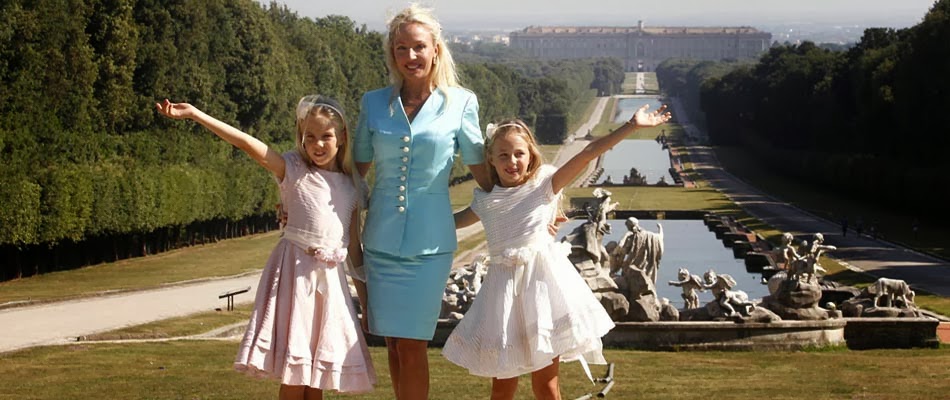 |
| The Duchess of Castro with Princesses Maria Carolina, Duchess of Palermo, and Maria Chiara, Duchess of Capri |
 On March 20, 2008, Prince Carlo, Duke of Castro, succeeded to his father's titles. He has been married to Italian heiress Camilla Crociani since 1998. They live in Monaco with their two young daughters, Princesses Maria Carolina (2003) and Maria Chiara (2003). The Duke and Duchess of Castro are close friends with the Crown Prince and Crown Princess of Denmark and he is one of the Godparents of the Crown Prince's younger daughter, Princess Josephine. He is also a Godfather of Prince Gaston of Orléans, whose father, Prince Jean, Duke of Vendome, is a first cousin of Prince Pedro, Duke of Noto (1968), only son of the Duke and Duchess of Calabria.
 |
| Duke of Calabria (Carlos) & his eldest son, Pedro, Duke of Noto |
Such intertwined connections have led to further tension even among Prince Pedro's cousins. Settling family disputes, especially one that had its origins more than a century ago, can be tricky, and in the history of Europe's royal families have never before been settled by mutual agreement between members of the family.
The Duke of Noto and the Duke of Castro were determined to change this and in act of considerable courage the two families, close in age and with young children, decided to set aside past differences. Negotiations proceeded over a year, with a senior member of the Infante Don Carlos's Constantinian Order asked to assist in this process. These led to two meetings between the families (in Paris and Madrid) and an agreement was drawn up.
The signing of the act of reconciliation was done privately. The Duchesses of Noto and Castro were also present for the ceremony, as well as the Duke of Noto's mother, the Duchess of Calabria, the Duke of Noto's sisters, Maria and Inés, and their husbands, Archduke Simeon and Michele Carrelli Palombi, their aunt, Princess Teresa, Marquesa de Laserma, the Duke of Castro's sister, Princess Napoleon, Prince Casimiro of Bourbon-Two Sicilies and his wife Princess Margherita, and the Duke of Braganza.
The Infante Don Carlos, Duke of Calabria, 76, is not well, and could not be present for the ceremony.
The two families will recognize each other's titles, and the Duke and Duchess of Castro's two daughters have received the titles of Duchess of Palermo and Duchess of Capri.
At future occasions connected with the dynasty, the family members attending will represent the whole family and the heads of each branch will be considered equal, sharing their historic responsibilities. The whole family is determined not to reignite the dispute and instead to work together in a spirit of unity for the common good, in a spirit of Christian reconciliation inspired by the aims of the Constantinian Order.
 |
| Duke of Noto |
 |
| Prince Jaime, Duke of Capua |
This is a major achievement for the Dukes of Castro and Noto. They will now work together to unite the Constantinian Order and the administrations of the Two Sicilies Orders of St. Januarius and Francis I.
[All but the first two photographs were provided to me privately for the use in this news story.]
Thursday, January 23, 2014
Nicholas II in Ekaterinburg

Princess Alice will wear a London-made gown
January 23, 1904
Princess Alice of Albany has chosen to wear a wedding gown made in London instead of "one dumped into Great Britain by some foreign dressmaker," reports the New York Times.
The Princess will marry Prince Alexander of Teck on February 10 at St. George's Chapel at Windsor.
The gown will be of "exquisitely soft satin, so fine as to resemble crepe de chene, and its beauty will be enhanced with lovely embroideries and lace."
Her "magnificent veil of Honiton lace," with a design including a rose, shamrock, and thistle," was worn by the Duchess of Teck and by her only daughter, the Princess of Wales.
at their weddings.
The bridesmaids will be dressed in pale-blue crepe de chine "trimmed with lace and the "grown-up Princesses will be girdled with waist belts of silver"
Princess Alice's "traveling dress" has been made in Stuttgart, and as "royal brides always wear white traveling costumes," this particular garment will also be white with some "touches of gold passementerie."
The wedding between Princess Alice and Prince Alexander will be "one of the most brilliant events of its kind in recent years."
Princess Alice is the daughter of the late Duke of Albany and the Duchess of Albany. The Duke was the youngest son of Queen Victoria. He died in 1884. The Duchess of Albany was Princess Helen of Waldeck und Pyrmont.
Among the guests expected to attend the wedding will be the King and Queen of Württemberg, the Queen Dowager of the Netherlands (the Duchess of Albany's sister), and the Prince and Princess of Wied.
Most of the royal guests will stay at Windsor Castle as "the guests of King Edward and Queen Alexandra." Others will "be the guests of the Prince and Princess of Wales at Frogmore."
Princess Alice will be driven to St.George's Chapel, accompanied by her brother, the Duke of Saxe-Coburg and Gotha. They will be met at the door by King Edward who will "give her away."
The bride will have five royal bridesmaids: Princesses Margaret and Patricia of Connaught, Princess Victoria of Wales, Princess Mary of Teck, and the "little princess of Waldeck, a first cousin of the bride."
The Archbishop of Canterbury will be officiating at the wedding.
After the wedding, the newlyweds will spend a few days at Brocket Hall, the home of Lord Mount Stephens, and then travel to Cannes and stay at the Villa Nevada, which the Duchess of Albany "inherited from Miss Percival."
It will be a princess
The Hereditary Prince and Princess of Saxe-Coburg and Gotha are expecting a princess. The baby, the first child for Hereditary Prince Hubertus and his American-born wife, Kelly, is due in the Spring.
https://www.infranken.de/regional/coburg/Kleine-Prinzessin-in-Coburg-im-Anflug;art214,615131,C
Subscribe to:
Posts (Atom)